Official sources checked on November 20, 2026.
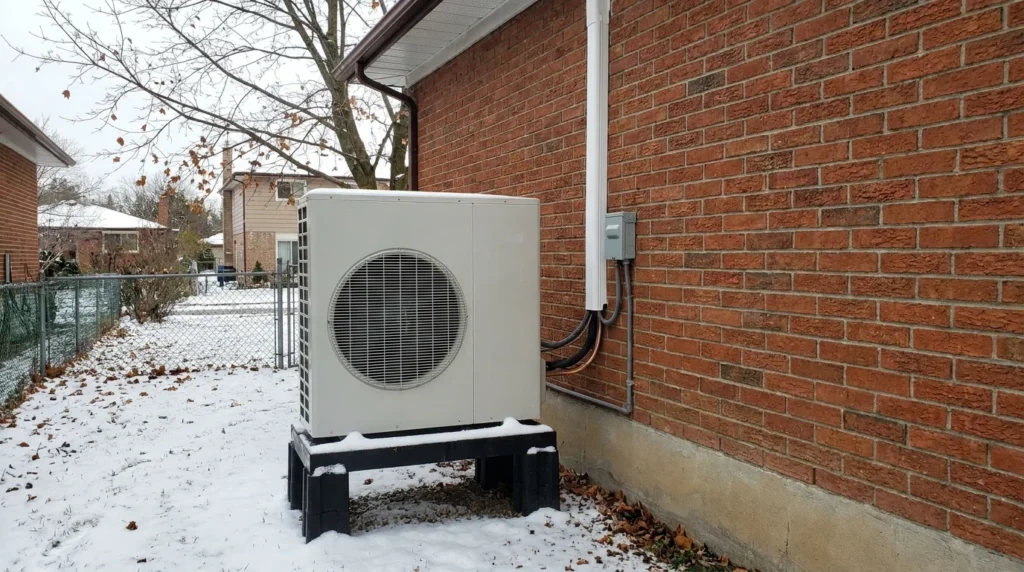
A 3 ton heat pump cost in Canada is about $9,800 before tax in Ontario for a cold-climate central unit installed on existing ductwork ($7,500 to $12,000), compared with about $10,800 in British Columbia, $10,900 in Alberta and $11,000 in Quebec, based on RénoClair price data reviewed in November 2026. Three tons means 36,000 BTU/h of nominal capacity. Whether your home needs 2, 3 or 4 tons is decided by a heat loss and heat gain calculation (Natural Resources Canada points to CSA F280-12), not by square footage alone.
Estimate the price for your province, system type and exact capacity with our heat pump cost calculator, which covers Ontario, Quebec, British Columbia and Alberta.
RénoClair tip
Ask for the load calculation before you compare prices. Two quotes for “3 tons” are only comparable if both contractors sized the system on the same heat loss, the same design temperature and the same NRCan sizing option.
In this guide
3 ton heat pump at a glance
| Question | Short answer (November 2026) |
|---|---|
| What is a ton? | 12,000 BTU/h, or about 3.5 kW of capacity (NRCan) |
| 3-ton capacity | 36,000 BTU/h nominal, about 10.5 kW |
| Typical installed cost, Ontario | $9,800 before tax ($7,500 to $12,000), about $11,074 with 13% HST |
| Typical installed cost, other provinces | BC $10,800, Alberta $10,900, Quebec $11,000 (before tax) |
| How size is decided | CSA F280 heat loss and heat gain calculation, then one of four NRCan sizing options (A to D) |
| Ontario rebate link to size | Home Renovation Savings pays per ton of rated heating capacity at 8.3 °C: $1,250/ton up to $7,500 (electric, oil, propane, wood) or $500/ton up to $2,000 (Enbridge gas) |
| Main sizing risk | Too small: backup heat runs more often. Too big: cycling and lower savings in mild weather |
What a “ton” means for a heat pump
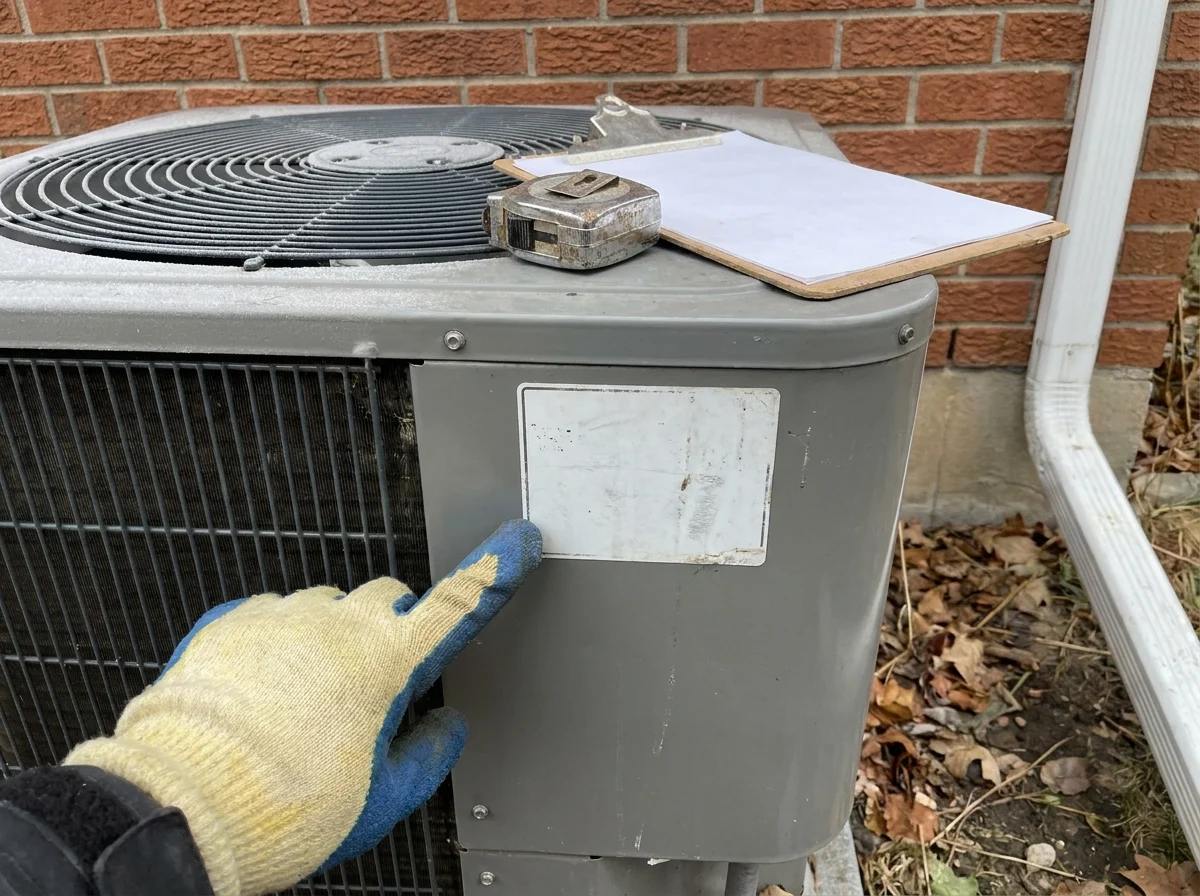
A ton is a unit of capacity, not weight. Natural Resources Canada (NRCan) defines it in its heat pump guide for homeowners: “A ton is a measure of heat pump capacity. It is equivalent to 3.5 kW or 12 000 Btu/h.” Residential central heat pumps are sold in half-ton steps, so a “3-ton” unit is a 36,000 BTU/h model.
| Nominal size | BTU/h | kW (approx.) | Common system type |
|---|---|---|---|
| 1.5 tons | 18,000 | 5.3 | Single-zone wall unit (ductless) |
| 2 tons | 24,000 | 7.0 | Multi-zone ductless or small central |
| 2.5 tons | 30,000 | 8.8 | Multi-zone ductless or central |
| 3 tons | 36,000 | 10.5 | Central unit on existing ducts |
| 3.5 tons | 42,000 | 12.3 | Central unit, larger or leakier homes |
| 4 tons | 48,000 | 14.0 | Central unit, large homes |
The nominal rating is not what you get on the coldest night. NRCan explains that as the outdoor temperature drops, “the ability of the heat pump to absorb heat also drops,” and that efficiency falls too: at 8 °C the coefficient of performance (COP) of air-source heat pumps “typically ranges from between 2.0 and 5.4,” while “at –8°C, COPs can range from 1.1 to 3.7.” For newer models, the minimum operating temperature “can range from between -15°C to -25°C,” and cold-climate units can work down to -30 °C. That is why a 3-ton unit in Ottawa or Edmonton covers less of the winter load than the same unit in Vancouver or Windsor.
3 ton heat pump cost by province (2026)
In Ontario, a 3-ton cold-climate central heat pump on existing ducts costs about $9,800 before tax. The table uses the same reference case and the same figures as our calculator: supplied and installed, ENERGY STAR Cold Climate range, standard installation, before tax, November 2026.
| Province | Low | Typical | High | Typical with sales tax |
|---|---|---|---|---|
| Ontario | $7,500 | $9,800 | $12,000 | $11,074 (13% HST) |
| British Columbia | $8,200 | $10,800 | $13,200 | $11,340 (5% GST) |
| Alberta | $8,700 | $10,900 | $13,600 | $11,445 (5% GST) |
| Quebec | $7,400 | $11,000 | $15,800 | $12,647 (GST + QST) |
In British Columbia the 7% PST on materials is paid by the contractor and is already inside installed prices, so only 5% GST is added. Prices are based on cross-checked contractor and distributor pricing in November 2026; they are planning figures, not quotes.
What the price includes, and what it does not
- Included: outdoor inverter unit and indoor coil, wall or ground bracket with vibration dampers, up to 15 to 20 ft of insulated copper line set, vacuum test and start-up by a certified refrigeration technician, dedicated 240 V circuit with outdoor disconnect.
- Common extras in Ontario (before tax): duct transition or extended line set $950 to $2,600 (typical $1,600); backup electric furnace or air handler $2,600 to $5,200 (typical $3,800); 100 A to 200 A service upgrade $2,500 to $5,000.
- Not included: a complete new duct network in a house without ducts ($3,000 to $6,500), oil tank removal, a custom snow shelter, annual maintenance ($150 to $280) and taxes.
If the electrician says your panel is full, price that part separately with our electrical panel upgrade cost calculator (100 A to 200 A service: $2,500 to $5,000 in Ontario and Alberta, $2,700 to $5,400 in BC).
Heat pump cost by size in Ontario: 2 to 4 tons
Each half-ton step adds roughly $1,000 to the typical Ontario price of a central cold-climate system. These figures come from the same capacity formula as the calculator (central unit on existing ducts, Cold Climate range, before tax).
| Size (BTU/h) | Low | Typical | High |
|---|---|---|---|
| 2 tons (24,000) | $5,750 | $7,700 | $9,350 |
| 2.5 tons (30,000) | $6,600 | $8,750 | $10,700 |
| 3 tons (36,000) | $7,500 | $9,800 | $12,000 |
| 3.5 tons (42,000) | $8,350 | $10,900 | $13,300 |
| 4 tons (48,000) | $9,200 | $11,900 | $14,600 |
Homes without ducts usually use one or several wall units instead; see our guide to mini split heat pump cost in Canada for single-zone and multi-zone prices, and our overview of heat pump cost in Ontario for ground-source and full-system budgets.
Considering geothermal instead? Our ground source heat pump cost in Ontario guide covers loop types, drilling rules and rebates.
Heat pump sizing: how the CSA F280 calculation works
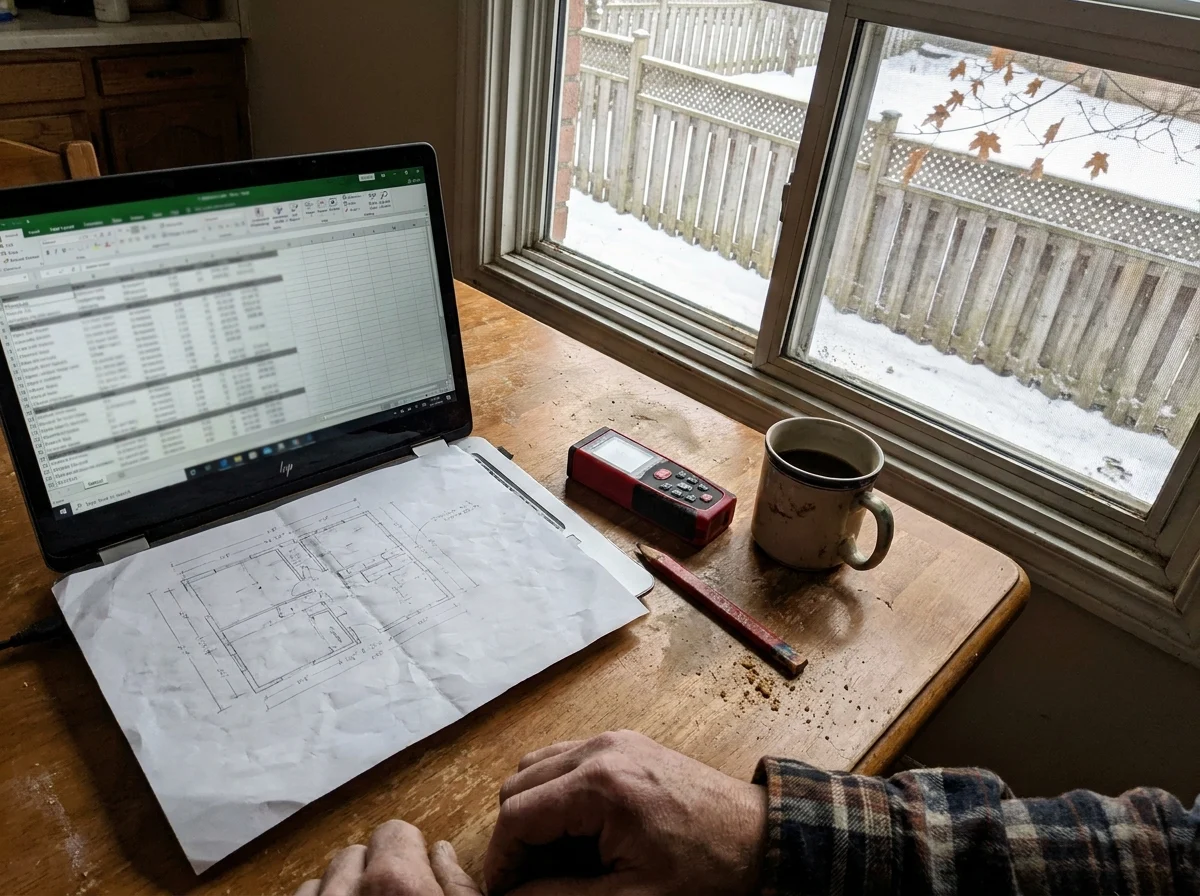
Heat pump sizing starts with two numbers: your design heating load and your design cooling load. NRCan states that “heating and cooling loads should be determined by using a recognized sizing method such as CSA F280-12, ‘Determining the Required Capacity of Residential Space Heating and Cooling Appliances’,” and that sizing “should be done according to your climate, heating and cooling building loads.”
- Design heating load: in NRCan’s sizing guide, the heat the house needs to stay at about 22 °C indoors under the CSA F280 design conditions for heating at your location.
- Design cooling load: the heat that must be removed to keep about 25 °C indoors under the design conditions for cooling. It includes both sensible heat and latent heat (moisture).
- What drives the result: the calculation is based on the building envelope (walls, attic, basement, windows and air leakage) and the local design temperatures, which is why two houses with the same floor area can need very different sizes.
NRCan adds that “it is recommended that a heating and cooling professional be retained to undertake the required calculations.” A contractor who quotes a size after a two-minute walk-through, without a written load report, has not done this step.
The four NRCan sizing options (A to D)
Once the loads are known, the installer chooses how much of the heating load the heat pump should cover. NRCan’s Air-Source Heat Pump Sizing and Selection toolkit (guide, Excel tool and worked examples) describes four sizing options. The names below are NRCan’s; the comments are RénoClair’s plain-language summary.
| Option | NRCan name | What it targets | Practical effect |
|---|---|---|---|
| A | Emphasis on Cooling | Cooling output within 80% to 125% of the design cooling load | Smallest unit; backup heat carries a larger share of the coldest days |
| B | Balanced Heating & Cooling | A compromise between cooling and heating needs | Mid-size unit between options A and D |
| C | Emphasis on Heating | More of the heating load, accepting a larger cooling capacity | Larger unit; less backup use, more risk of cycling in summer |
| D | Sized on Design Heating Load | The full heating load at the design temperature | Largest unit; check that ducts and electrical service can handle it |
In most Canadian homes the heating load is far larger than the cooling load, so Option A and Option D can point to very different tonnages for the same house. Neither is wrong: the choice depends on your backup heat, your fuel, your ducts and your budget.
Why square feet per ton charts mislead
A square-foot chart can tell you whether a quote is in the right range, but it cannot size your system. Many online charts assign a fixed number of square feet to each ton. NRCan’s guidance never sizes a heat pump that way: it ties the size to the heating and cooling loads of the house and to the climate.
- Insulation and air sealing: a 1970s split-level with original windows can lose far more heat per square foot than a newer home of the same size.
- Climate: design temperatures in Thunder Bay, Ottawa or Edmonton are much colder than in Windsor or Vancouver, so the same home needs more capacity there.
- Basements and storeys: a finished basement, a cathedral ceiling or a second storey changes the load without changing the footprint much.
- Ducts: an existing duct system sized for a small air conditioner may limit how large a central heat pump can be.
RénoClair tip
If you plan to air-seal or add attic insulation within a year or two, do it before you size the heat pump. A lower heat loss can move you down a half-ton or more, which also lowers the price.
Oversized vs undersized heat pumps: what goes wrong
Undersizing mostly costs you in backup heat; oversizing mostly costs you in comfort and efficiency. NRCan describes both cases on its heat pump page:
- Undersized: “the supplemental heating system will be used more frequently.” NRCan adds: “while an undersized system will still operate efficiently, you may not get the anticipated energy savings.”
- Oversized: “the desired energy savings may not be realized due to inefficient operation during milder conditions,” and “the unit cycles on and off leading to discomfort, wear on the heat pump, and stand-by electric power draw.”
The key idea is the thermal balance point: the outdoor temperature at which the heat pump’s output just matches the home’s heat loss. NRCan notes that below this temperature “a supplemental system must be used to provide heating to the building,” and that supplementary heat may also be needed during defrost. A well-sized system puts the balance point low enough that backup heat runs only on the coldest days.
Worked example: 2 tons or 3 tons for an Ontario home?
In this example, the 3-ton system costs $1,123 more than the 2-ton system after the Ontario rebate, but covers 95% of the design heat loss at its nominal rating instead of 63%. The house and the loads are an illustration, not a real customer; the prices are the calculator’s Ontario figures.
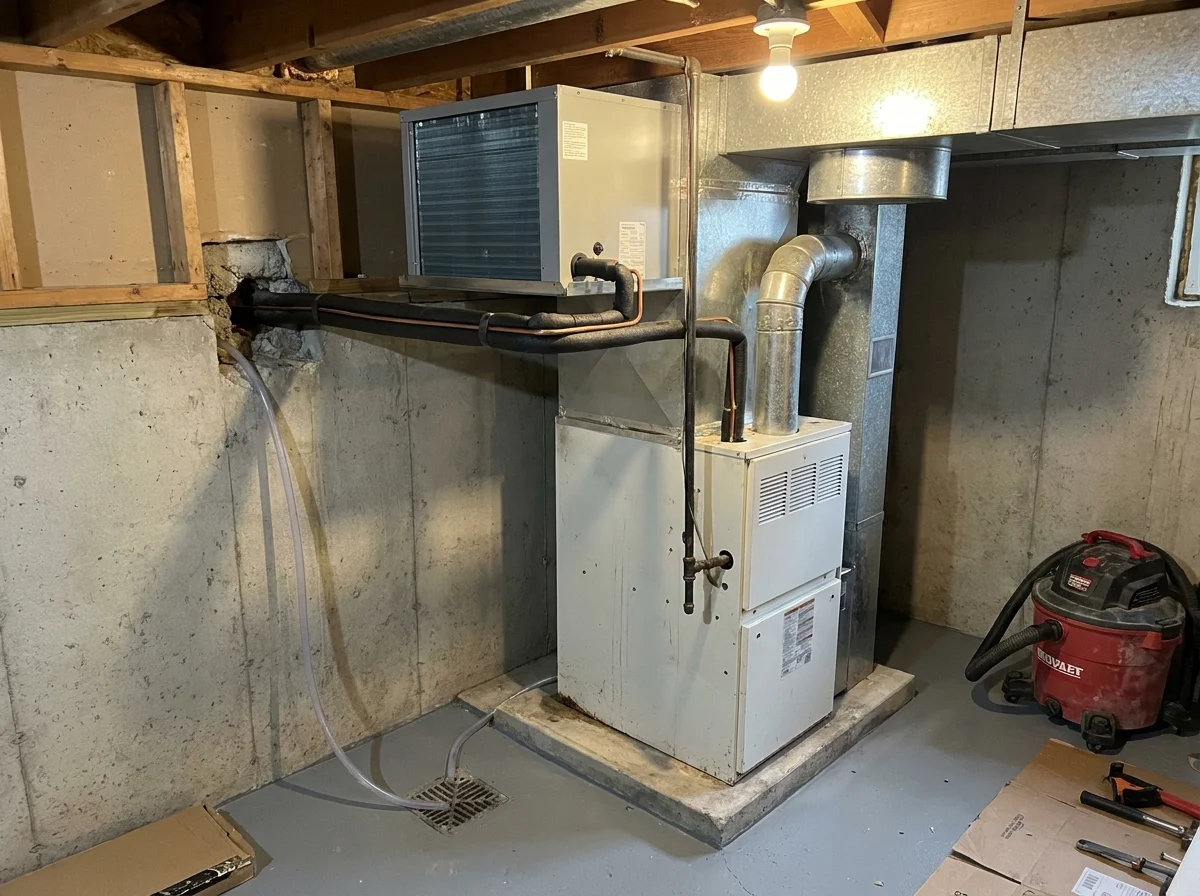
- House: 1970s two-storey in southern Ontario, existing ducts, electric furnace kept as backup.
- Load report (assumed): design heating load 38,000 BTU/h (3.17 tons), design cooling load 22,000 BTU/h.
- Option A (Emphasis on Cooling): 80% to 125% of 22,000 BTU/h = 17,600 to 27,500 BTU/h, so a 2-ton (24,000 BTU/h) unit fits.
- Option D (Sized on Design Heating Load): about 38,000 BTU/h, so the contractor proposes a 3-ton cold-climate unit and checks its output at the design temperature in the manufacturer’s data.
- Rebate assumption: the selected cold-climate models are rated at 2.4 tons and 3.4 tons of heating capacity at 8.3 °C (rated capacity at 8.3 °C can differ from the nominal size; check the actual model).
| Line (Ontario, November 2026) | 2-ton option (A) | 3-ton option (D) |
|---|---|---|
| Central cold-climate heat pump, typical | $7,700 | $9,800 |
| Duct transition / line set, typical | $1,600 | $1,600 |
| Subtotal before tax | $9,300 | $11,400 |
| Total with 13% HST | $10,509 | $12,882 |
| Home Renovation Savings, electric home ($1,250/ton) | −$3,000 | −$4,250 |
| Net cost, electric home | $7,509 | $8,632 |
| Nominal capacity vs design heat loss | 63% | 95% |
| If the home heats with Enbridge gas ($500/ton, max $2,000) | Net $9,309 | Net $11,182 |
For the electric-heated home the gap after the rebate is $1,123 ($8,632 − $7,509). For an Enbridge gas home it widens to $1,873 ($11,182 − $9,309), because the gas rebate is only $500 per ton. The 2-ton option is cheaper up front, but the electric backup will run more often in January and February; the 3-ton option costs more but leaves less of the winter to resistance heat. Redo this calculation with your own size and province in our heat pump cost calculator.
How Ontario’s rebate ties to heat pump size
Under Home Renovation Savings, a bigger cold-climate heat pump earns a bigger rebate, up to a cap. The official heat pump page (read on November 20, 2026) lists $1,250 per ton, up to $7,500, for homes heated with electricity, oil, propane or wood, and $500 per ton, up to $2,000, for Enbridge Gas customers who heat with natural gas (rental equipment: $500 per ton, up to $2,000). “Incentives are calculated based on the total rated heating capacity at 8.3C (47F).”
- The unit must be an active model on Natural Resources Canada’s qualified products list for cold-climate air-source heat pumps.
- “Pre-approval is mandatory. Installations done before approval are not eligible for rebates.”
- The cap is reached at 6 tons of rated capacity in an electric, oil, propane or wood home ($7,500 ÷ $1,250) and at 4 tons in an Enbridge gas home ($2,000 ÷ $500), so oversizing beyond the load to chase the rebate rarely pays.
Estimate your amount with our heat pump rebate calculator, and read the full rules in our guide to the heat pump rebate in Ontario. Programs in British Columbia and Alberta follow different rules; check your provincial program before you choose a size.
Questions to ask before you sign
A good sizing conversation takes 15 minutes and saves years of comfort problems. NRCan suggests asking every contractor: “How are you ensuring that the heat pump is properly sized for my home?” Then check these points:
- Can I have a copy of the CSA F280 load calculation (design heating load and design cooling load in BTU/h)?
- Which design temperature did you use for my town?
- Which NRCan sizing option (A, B, C or D) did you choose, and why?
- What is the unit’s heating output at my design temperature, from the manufacturer’s performance data, not just the nominal tonnage?
- At what outdoor temperature will the backup heat start, and what is the backup (existing furnace, electric air handler, baseboards)?
- Can my existing ducts carry the airflow of this size, or is a duct transition needed?
- Is my electrical panel large enough, or will I need a service upgrade?
- Is the exact model on the NRCan cold-climate list, and will you request pre-approval before installation (Ontario)?
Common sizing mistakes
- Copying the old furnace size. The heat pump should follow the load report, not the old nameplate.
- Matching the old air conditioner. A 2-ton AC reflects the cooling need, not the heating load, which is usually much higher in Canada.
- Using a square-foot chart as the final answer. It ignores insulation, windows, air leakage and climate.
- Comparing quotes on tons only. A 3-ton standard model and a 3-ton cold-climate model can deliver very different heat in deep cold.
- Sizing up to chase the rebate. The Ontario rebate pays per ton of rated capacity, but an oversized unit can cycle in mild weather and costs more to buy.
- Forgetting the backup plan. Below the balance point a supplemental system must take over; decide which one before installation.
Frequently asked questions
How much does a 3 ton heat pump cost in Ontario?
A 3 ton heat pump cost in Ontario is about $9,800 before tax for a cold-climate central unit on existing ducts ($7,500 to $12,000), or about $11,074 with 13% HST, before any rebate (November 2026). Check your own case with our heat pump cost calculator.
How many square feet does a 3 ton heat pump heat?
There is no fixed number. The area a 3-ton unit can heat depends on the home’s heat loss and on the local design temperature; NRCan recommends a CSA F280 calculation by a heating and cooling professional.
How many BTU is a 3 ton heat pump?
36,000 BTU/h. NRCan defines one ton as 12,000 BTU/h or 3.5 kW, so 3 tons is about 10.5 kW of nominal capacity.
Is it better to oversize or undersize a heat pump?
Neither. According to NRCan, an undersized unit uses supplemental heat more often, while an oversized unit cycles on and off, which reduces comfort and savings in mild weather. Size to the load report.
What size heat pump do I need for a 2,000 sq ft house?
It depends on insulation, air leakage, windows and climate, so two 2,000 sq ft houses can need different sizes. Ask for a CSA F280 report before you accept a size.
Does the Ontario rebate pay more for a bigger heat pump?
Yes, up to a cap. Home Renovation Savings pays $1,250 per ton up to $7,500 in homes heated with electricity, oil, propane or wood, and $500 per ton up to $2,000 for Enbridge gas customers, based on rated heating capacity at 8.3 °C.
Do I need backup heat with a properly sized heat pump?
Usually yes. NRCan explains that below the thermal balance point a supplemental system must provide heat, and backup may also be needed during defrost.
The bottom line
A 3-ton heat pump (36,000 BTU/h) typically costs about $9,800 before tax in Ontario, $10,800 in BC, $10,900 in Alberta and $11,000 in Quebec as a cold-climate central system on existing ducts. Whether you need 3 tons, less or more depends on a CSA F280 load calculation and the NRCan sizing option you choose: cooling-led sizing gives a smaller, cheaper unit with more backup heat, heating-led sizing gives a larger unit with less backup. Ask for the load report, compare quotes on the same basis, and check prices for your size with the heat pump cost calculator. If you are still deciding between systems, see our comparison of heat pump vs furnace.
Sources
- Natural Resources Canada, Heat pumps for home heating and cooling (ton definition, CSA F280-12, sizing considerations, COP, balance point), read November 20, 2026.
- Natural Resources Canada, Toolkit for air-source heat pump sizing and selection and its Addendum of Worked Examples (Version 1.0, 2020-12-21): sizing options A to D and the 80% to 125% cooling-load range, read November 20, 2026.
- Natural Resources Canada, Heat pump basics (cold-climate operation), read November 20, 2026.
- Home Renovation Savings, heat pumps (Save on Energy and Enbridge Gas: amounts per ton, 8.3 °C rating basis, pre-approval), read November 20, 2026.
- Installed prices: RénoClair heat pump cost calculator data (November 2026), cross-checked against published contractor and distributor pricing in Ontario, Quebec, British Columbia and Alberta.