
Official sources checked on October 11, 2026.
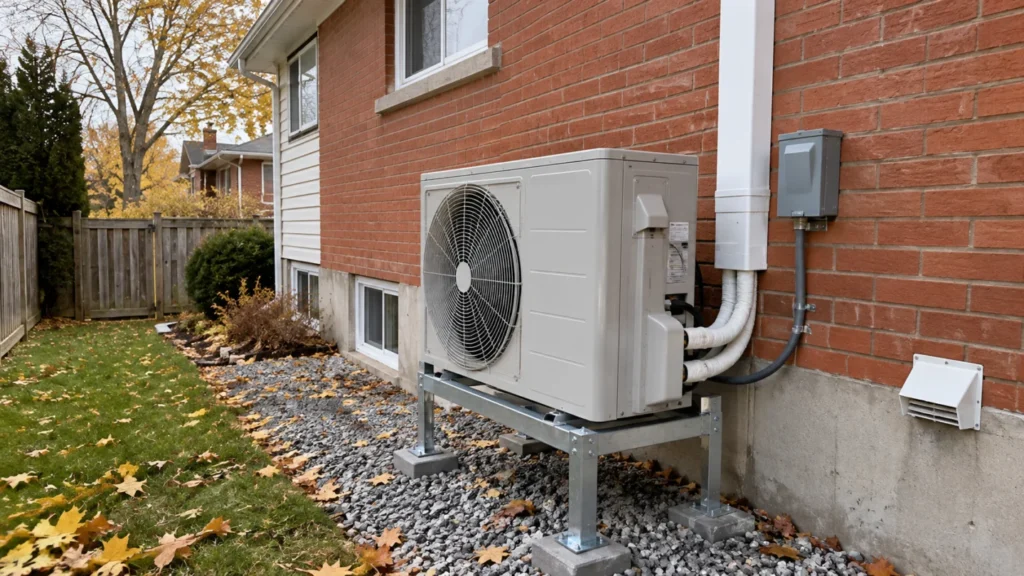
The main heat pump rebate Ontario homeowners can claim in 2026 comes from the Home Renovation Savings program, run by Save on Energy and Enbridge Gas. It pays $1,250 per ton, up to $7,500, for a cold climate air source heat pump in a home heated with electricity, oil, propane or wood, and $500 per ton, up to $2,000, in a home heated with Enbridge natural gas. A ground source system gets up to $12,000, or a flat $3,000 in a gas-heated home.
No home energy assessment is required for these rebates. Two rules catch people out, though: pre-approval is mandatory before any installation, and the work must be done by a contractor on the program’s participating list. A heat pump installed before the program approves the application gets nothing.
Calculate your rebate: enter your heat pump’s capacity and your current heating in our Ontario heat pump rebate calculator, or use it right here.
In this guide
Ontario heat pump rebate amounts at a glance
The amount depends on two things: what heated your home before the project, and the type of heat pump you install. These are the figures published on the program’s heat pump page and in its Heat Pump Program Stream Requirements (version dated May 2025), as read on October 11, 2026.
| Main heating before the project | Cold climate air source heat pump | Ground source heat pump |
|---|---|---|
| Electricity, oil, propane or wood (home on the Ontario electricity grid) | $1,250 per ton, up to $7,500 | $2,000 per ton, up to $12,000 |
| Natural gas, as an Enbridge Gas customer | $500 per ton, up to $2,000 | $3,000 flat rate |
| Rented heat pump, any of the fuels above | $500 per ton, up to $2,000 | $3,000 flat rate |
| Rule | What the program says |
|---|---|
| Home energy assessment | Not required for heat pumps |
| Pre-approval | Mandatory. Installations done before approval are not eligible |
| Installer | A contractor from the Participating HVAC Contractor List |
| Equipment | An active model on Natural Resources Canada’s qualified products list |
| First heat pump only | Homes that already have a heat pump for space heating are not eligible |
| Number of rebates | One heat pump rebate per eligible home; up to three air source units can count toward it |
| Payment | Cheque by mail within 60 days of the post-installation application being approved |
| Program support | 1-866-449-8510, Monday to Friday, 9 a.m. to 6 p.m. |
There is no rebate listed for a conventional air source heat pump that is not a cold climate model. Air-to-water systems and direct expansion (DX) ground source systems are also excluded by the program requirements.
Heat pump rebate Ontario: how the per-ton calculation works
The rebate is the heat pump’s rated heating capacity in tons multiplied by the per-ton rate, up to the maximum. The tonnage is not rounded. Natural Resources Canada defines a ton as 3.5 kW or 12,000 Btu/h of capacity in its guide Heating and cooling with a heat pump (page modified December 24, 2025).
The program’s own example, from its help and support page, is a 3.2-ton cold climate air source heat pump: $1,600 in a home heated with Enbridge natural gas ($500 × 3.2), or $4,000 in a home heated with oil, propane, wood or electricity ($1,250 × 3.2).
The table below applies the same official rates to common sizes. These are our calculations, not program quotes; the program confirms the real figure when it approves the application.
| Rated heating capacity | Home heated with Enbridge natural gas ($500 per ton) | Home heated with electricity, oil, propane or wood ($1,250 per ton) |
|---|---|---|
| 1.5 tons | $750 | $1,875 |
| 2 tons | $1,000 | $2,500 |
| 2.5 tons | $1,250 | $3,125 |
| 3 tons | $1,500 | $3,750 |
| 3.5 tons | $1,750 | $4,375 |
| 4 tons | $2,000 (maximum reached) | $5,000 |
| 5 tons | $2,000 | $6,250 |
| 6 tons or more | $2,000 | $7,500 (maximum reached) |
Two details matter when you compare quotes.
- “Up to $7,500” needs 6 tons of capacity. A 3-ton system, for example, gets $3,750. In a gas-heated home, the $2,000 maximum is reached at 4 tons.
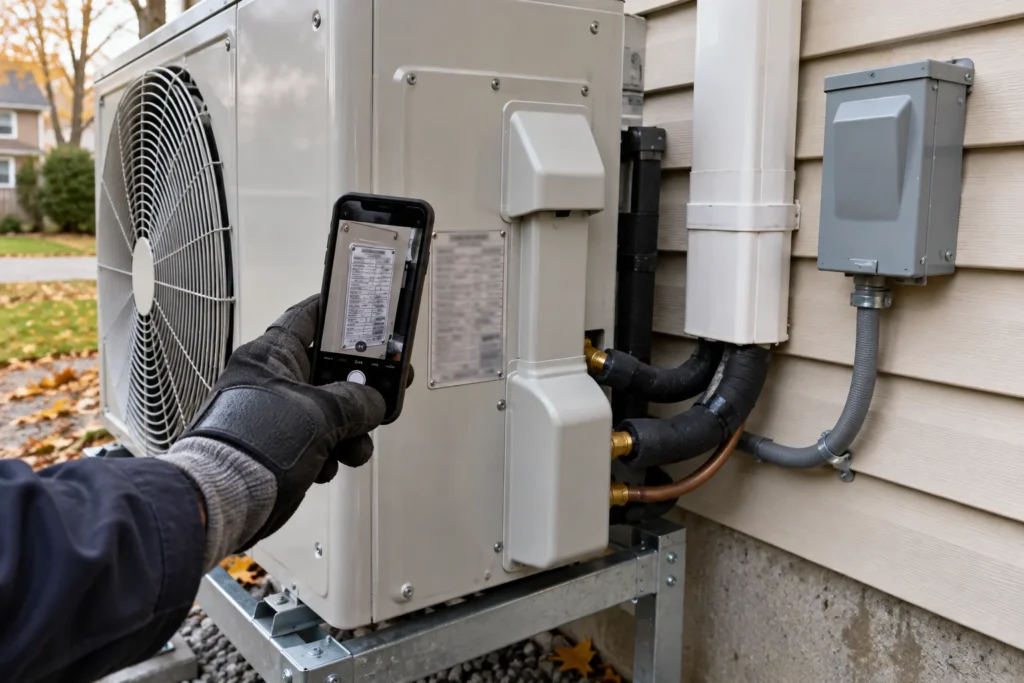
- The capacity used is the rating at 8.3°C (47°F), not the nominal size on the brochure. The program documents are not perfectly consistent here: the requirements and the rebate table refer to the “total rated heating capacity” at 8.3°C, while the heat pump page and one help answer say “minimum rated heating capacity”. Ask the contractor to write on the quote the capacity figure and the rebate amount they will enter in the pre-installation application.
More than one unit
Up to three cold climate air source units can be combined into the single rebate. The requirements give two examples: a 1-ton unit plus a 2-ton unit (3 tons) pays $1,500 in a gas-heated or rental situation and $3,750 otherwise; two 3-ton units (6 tons) pay the $2,000 or $7,500 maximum.
Ground source (geothermal) systems
In homes heated with electricity, oil, propane or wood, a ground source heat pump pays $2,000 per ton up to $12,000, calculated on the closed-loop heating capacity (open-loop capacity for open-loop-only models). In a home heated with Enbridge natural gas, or when the equipment is rented, the rebate is a flat $3,000 whatever the size.
Four worked examples
Each example uses the official rates above. The dollar figures are rebates only; installation prices vary too much by home to generalize here.
1. Gas furnace kept as backup
A semi-detached home heated by an Enbridge natural gas furnace adds a centrally ducted cold climate heat pump rated at 2.5 tons and keeps the furnace as backup. Rebate: 2.5 × $500 = $1,250. The program accepts a new or existing furnace as backup, but the backup system itself earns no rebate.
Heating with Enbridge natural gas? Our Enbridge heat pump rebate guide covers the gas-customer tier, keeping your furnace as backup and the other Enbridge rebates still open.
Before switching from gas, compare running costs too. At Ontario’s November 2026 electricity prices and Enbridge’s October 2026 gas rates, a new gas furnace still delivers heat for less per kWh than most air-source heat pumps; our heat pump vs furnace guide shows the full calculation.
2. Oil-heated home
A rural home heated with oil installs a 3-ton cold climate heat pump. Rebate: 3 × $1,250 = $3,750. For oil, the heat pump must be sized to fully offset the oil heating load, the owner signs the program’s Oil/Propane Tank Removal Attestation Form, and tank work goes through a TSSA-registered contractor.
3. Electric baseboards, two ductless systems
A bungalow with electric baseboards installs two ductless cold climate systems rated at 1.5 and 2 tons. Rebate: 3.5 × $1,250 = $4,375. The existing baseboards can stay as backup. The system must be able to distribute heat throughout the entire conditioned space, including the basement if there is one.
4. Ground source in an electrically heated home
A home with an electric furnace installs a closed-loop ground source heat pump rated at 5 tons. Rebate: 5 × $2,000 = $10,000. The same system in a home heated with Enbridge natural gas would receive the flat $3,000.
Who is eligible
You must own the home and fit one of two heating profiles. The conditions below come from the program’s heat pump page and its Program Stream Requirements.
- Owner. You own the home where the heat pump will be installed and you pay for the purchase and installation. Where there are tenants, the owner must apply; tenants cannot apply.
- Gas route. You are an Enbridge Gas residential customer with an active account and the home is primarily heated by a natural gas furnace or boiler.
- Other fuels route. The home is connected to the Ontario electricity grid and is heated with electricity, oil, propane or wood. The requirements describe the electric case as an “electric-resistance heated home”, meaning baseboards or an electric furnace rather than an existing heat pump.
- Home type. Single detached, semi-detached, row house, townhome, or mobile home on a permanent foundation. The requirements also allow an individual unit in a stacked townhome, duplex or triplex that has its own heating system; that case is not listed on the web page, so confirm it with the program before you commit.
- Not a new build. The home must have been occupied for at least six months.
- First heat pump. It must be the first installation of a space-heating heat pump in the home. Replacing an existing heat pump is not eligible.
Who is not eligible
- Homes heated with natural gas from a utility other than Enbridge Gas. The program states that if you are not an Enbridge Gas customer, you are not eligible on the gas route.
- Cornwall Electric customers, unless the home is primarily heated by Enbridge natural gas (their homes are not connected to the IESO-controlled grid).
- Homes where a fireplace is the main heat source: fireplaces are not considered a primary space heating type.
- Tenants applying on their own.
If you own several properties, you can take part for each one, provided each meets all the criteria. The Participant Agreement also has you confirm that you had not already made a binding commitment to buy the equipment before applying.
Which heat pumps qualify
Only cold climate air source heat pumps and ground source heat pumps qualify, and the exact model must be active on a federal list on the day it is assessed.
Cold climate air source heat pumps
Centrally ducted, partially ducted and ductless systems (mini-splits and multi-splits) are all accepted. If you are still choosing between a wall-mounted and a central system, our guide comparing ductless and central heat pumps (in French) walks through the trade-offs. The requirements set these minimums:
| Criterion | Minimum required |
|---|---|
| Listing | Active model on NRCan’s list of air source and cold climate heat pumps |
| HSPF2 (Region V) | 6.6 |
| SEER2 | 15.2 |
| Rated heating capacity at 8.3°C (47°F) | 12,000 Btu/h |
| COP at −15°C (5°F), maximum capacity | 1.8 |
| Capacity maintained at −15°C versus 8.3°C | 70% |
| Compressor | Variable capacity: three or more speeds, or continuously variable |
| Matching | All components listed together under the same AHRI number |
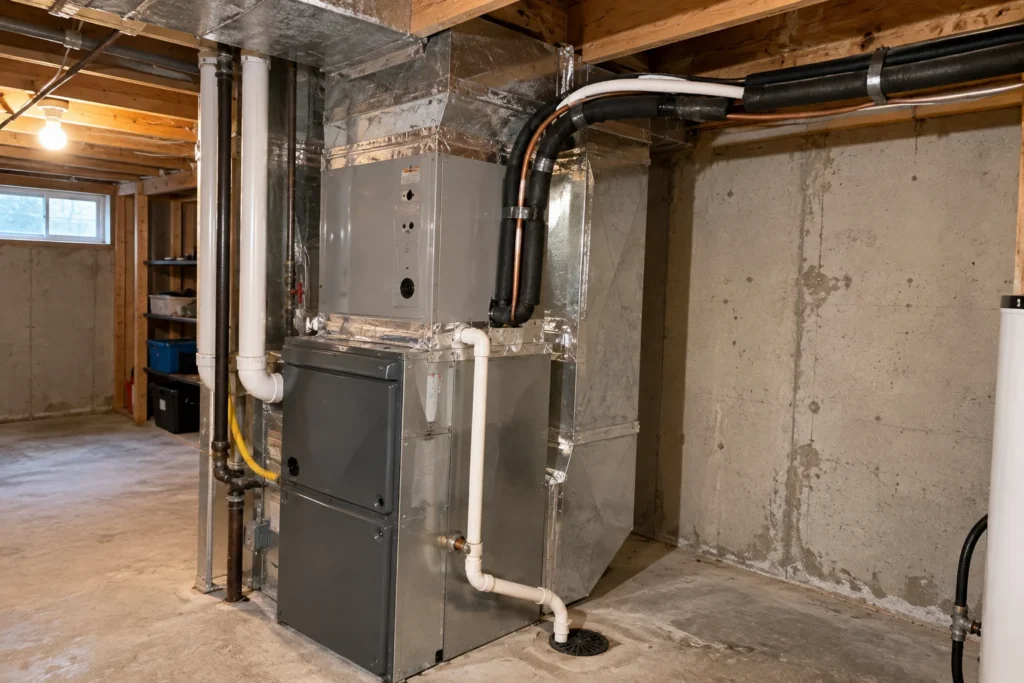
The system must be able to heat and cool year-round. With ductless equipment, both the indoor and outdoor units must be new: adding an indoor head or replacing a single component does not qualify.
Ground source heat pumps
Water-to-air models must be active on NRCan’s ground source list. Water-to-water models must be on the ENERGY STAR certified geothermal heat pump list, be available in Canada and come with their AHRI certificate. The installer needs IGSHPA certification.
Sizing: the rule that depends on your fuel
The contractor must complete NRCan’s air source heat pump sizing and selection tool for each outdoor unit. NRCan’s sizing and selection toolkit (page modified September 23, 2026) describes four approaches, and the program accepts different ones depending on what you heat with today.
| NRCan sizing option | What it means | Accepted for gas and propane homes | Accepted for oil, wood and electric homes |
|---|---|---|---|
| A. Emphasis on cooling | Sized for cooling; the existing system does most of the heating | Yes | No |
| B. Balanced heating and cooling | The backup system is used mainly in colder weather | Yes | No |
| C. Emphasis on heating | The heat pump is the main heat source; backup runs in the coldest periods | Yes | Yes |
| D. Sized on design heating load | The heat pump provides all or nearly all the heating | Yes | Yes |
In practice, a home heated with oil, wood or electricity cannot get the rebate for a small unit chosen mainly for air conditioning. A ground source system in those homes must be sized to meet the full heating load.
How to apply, step by step
To apply for the heat pump rebate Ontario homeowners go through a participating contractor, who files the paperwork, but the order of the steps is your responsibility. The program describes four stages.
- Confirm your eligibility. Fill in the short form on the program’s heat pump page to receive a list of participating HVAC contractors, or search the heat pump contractor directory.
- Choose a participating contractor. The contractor must be registered and listed before the installation. They help you select the unit and submit the pre-installation application: an itemized work order, photos of the existing heating system and its nameplates, your signed Participant Agreement and the NRCan sizing form (plus the tank attestation for oil and propane homes).
- Wait for written approval, then install. The contractor can install the heat pump only once the pre-installation application is approved.
- Receive the rebate. The contractor must submit the post-installation application within 30 days of the installation. Once it is approved, the cheque should arrive by mail within 60 days.
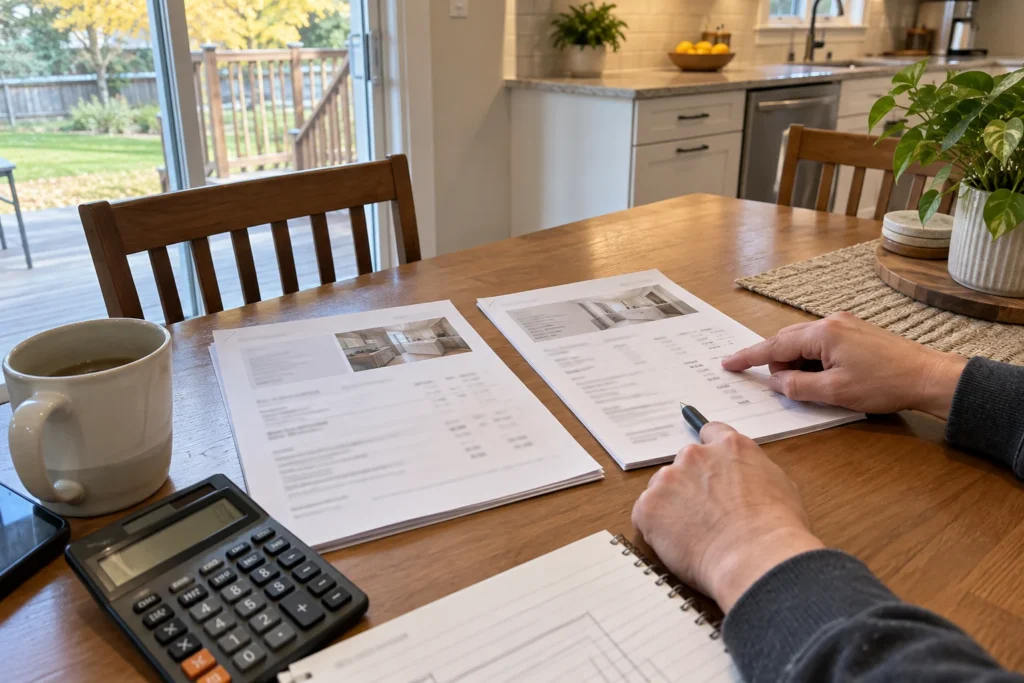
A portion of installations are randomly chosen for quality assurance audits, so keep the invoice, the model and AHRI numbers and the approval emails. The rebate is not guaranteed until you have written approval of the post-installation application.
RénoClair tip
In the Participant Agreement, you confirm that you have not already entered into a binding commitment to purchase the equipment. Before you sign a purchase contract or pay a deposit, ask the contractor how they handle this point, and make sure nothing is installed until the written pre-approval has arrived.
Before you sign: an eight-point checklist
Most of the eligibility rules above translate into something you can check on the quote. Go through these points before you commit.
- The contractor appears on the program’s Participating HVAC Contractor List today, not “soon”.
- The quote shows the exact model numbers and the AHRI number of the matched system.
- The quote shows the rated heating capacity at 8.3°C in Btu/h or tons, and the rebate calculated from it.
- The NRCan sizing option is stated (C or D if you heat with oil, wood or electricity).
- The price is shown in full, before the rebate: the program pays by cheque after the work.
- Installation is scheduled after written pre-approval, and the contract says so.
- For a gas-heated home, ask for an estimate of running costs. The Participant Agreement itself warns that, with the federal carbon charge removed on April 1, 2025, a heat pump at a gas-heated home “has the potential to increase overall home energy bills”.
- Nobody came to your door. The program states that participating contractors never show up without an appointment and do not offer loans or payment plans; see its page on rebate scams.
For a sense of what installed systems cost before rebates, our installed heat pump cost guide (in French, with Quebec prices) breaks quotes down by system type; prices in Ontario will differ. Once the system is running, our winter heat pump maintenance checklist (in French) covers the seasonal checks.
Can you combine it with other programs?
Partly. The heat pump rebate Ontario offers cannot be combined with another incentive from Enbridge Gas, Save on Energy or the Government of Ontario for the same equipment. Funding from other sources is allowed, as long as the total does not exceed 100% of the cost to supply and install the heat pump.
Federal programs
New federal rebate (announced October 8, 2026, not yet open): the federal government has announced a separate rebate for electric cold climate air source heat pumps on its eligible products list: $2,000 for eligible homeowners, or up to $10,000 for households with an income below the median. The announcement says it can be combined with existing provincial programs. The opening date, the application portal and the income threshold have not been published, so confirm the details with Natural Resources Canada before planning around it.
- Canada Greener Homes Grant: closed. December 31, 2025 was the last day to submit documents.
- Canada Greener Homes Loan: closed. NRCan’s loan page (modified April 17, 2026) states that funding is fully committed and new applications cannot be approved.
- Canada Greener Homes Affordability Program: as of NRCan’s program page modified August 31, 2026, Ontario is not on the list of provinces where residents can apply.
City loans in Toronto and Ottawa
Two Ontario cities offer loans repaid through the property tax bill that can cover the part of the project the rebate does not. These are loans, not grants.
| Toronto: Home Energy Loan Program (HELP) | Ottawa: Better Homes Ottawa Loan Program | |
|---|---|---|
| Maximum | $125,000 or 10% of the property’s current value assessment, whichever is less | $125,000 or 10% of the assessed value, whichever is less; minimum $10,000 |
| Rate | Fixed. Rates posted as valid until September 30, 2026: 3.34% (5 years) to 4.75% (20 years) | Fixed 4.33% over 20 years |
| Fee | 2% administrative charge | Administrative fee of 4% of the loan |
| Heat pumps | Air source and geothermal eligible. Heat pump-only projects no longer need an EnerGuide assessment | Air source and ground source eligible. An EnerGuide assessment is required |
| Extra for heat pumps | None stated on the program page | Heat Pump Incentive for loan participants: $700 per ton (cold climate air source), $1,000 per ton (ground source); conditions apply |
| Source | toronto.ca, modified September 28, 2026 | betterhomesottawa.ca, no date shown |
Toronto’s page had not yet shown rates for October 2026 when we read it, and Ottawa’s page carries no update date: confirm the current rate with the city before you apply. Toronto says HELP can be combined with rebates from the province and utilities. If you plan to add Ottawa’s incentive to the provincial rebate, ask both programs to confirm it in writing.
Other Home Renovation Savings rebates
Heat pump water heaters ($500) and upgrades such as windows and insulation belong to a separate stream that does require a home energy assessment and at least two upgrades. That stream has dates: the follow-up assessment must be completed within 180 days of the first one or by December 31, 2026, whichever comes first, and it must be scheduled by November 30, 2026. Its rebates are capped at $5,000 for homes heated with Enbridge natural gas and $10,000 for homes heated with electricity, oil, propane or wood.
Attic insulation is the exception: it also has its own stream with no assessment, which pays 50% of the after-tax cost, up to $1,250, for work completed by November 30, 2026. Our Ontario attic insulation rebate guide explains the amounts and the steps.
For every other rebate in the program, from solar and batteries to smart thermostats, appliances and the full list of assessment-stream upgrades, see our complete guide to the Home Renovation Savings program.
Lower income? A free heat pump may be available
Households under certain income limits may get a cold climate air source heat pump installed at no cost instead of a rebate, if the home is heated with electricity or oil. This is Save on Energy’s Energy Affordability Program, which states that it is “now offering free cold climate air source heat pumps to income-eligible households with electric or oil heating” on its heat pump page.
| People in the home | Before-tax household income limit |
|---|---|
| 1 | $48,220 |
| 2 | $68,193 |
| 3 | $83,518 |
| 4 | $96,439 |
| 5 | $107,823 |
| 6 | $118,113 |
| 7 or more | $127,576 |
Households that received certain benefits in the past 12 months (for example Ontario Works, the Ontario Disability Support Program, the Guaranteed Income Supplement or the Ontario Electricity Support Program) can qualify on that basis instead. Apply by phone at 1-844-770-3148 or through the online form; the limits are reviewed from year to year.
For oil-heated homes, the federal government co-funds this route. NRCan’s page for participating provinces and territories (modified August 25, 2026) describes free installation of a heat pump system valued at up to $25,000 in Ontario (up to $15,000 federal and up to $10,000 provincial), with nothing paid to the applicant except a $250 bonus cheque. The federal intake closed on July 31, 2026 in the provinces where the federal government delivers the program directly; for Ontario, NRCan refers applicants to the provincial program for deadlines, so confirm availability with Save on Energy.
If your home is heated with natural gas and you are within the same income limits, Enbridge’s Home Winterproofing Program offers free insulation and draft proofing. Its page does not mention heat pumps.
Comparing a heat pump with a new gas furnace? Our furnace replacement cost in Ontario guide shows installed prices, extras and permit rules for a like-for-like replacement.
To estimate the installed price before rebates, use our heat pump cost calculator (low, typical and high, with the detailed budget as a PDF).
Frequently asked questions
How much is the heat pump rebate Ontario offers in 2026?
$1,250 per ton up to $7,500 for a cold climate air source heat pump in a home heated with electricity, oil, propane or wood, and $500 per ton up to $2,000 in a home heated with Enbridge natural gas. Ground source systems get $2,000 per ton up to $12,000, or a flat $3,000 in a gas-heated home.
Do I need a home energy assessment to get the heat pump rebate?
No. The Home Renovation Savings program lists heat pumps among the rebates that do not require a home energy assessment. You do need written pre-approval and a participating contractor.
Can I get the rebate for a heat pump that is already installed?
No. Pre-approval is mandatory and installations done before approval are not eligible. Homes that already have a heat pump for space heating are also excluded, because replacements do not qualify.
Do I have to remove my gas furnace?
No. In gas and propane homes, a new or existing furnace can stay as backup, and electrically heated homes can keep their existing electric backup. Only the heat pump earns the rebate, not the backup system.
Can tenants or landlords apply?
Tenants cannot apply. A landlord who owns an eligible home and pays for the installation can, and where an owner has tenants it is the owner who must apply.
How long does it take to receive the money?
The contractor has 30 days after the installation to submit the post-installation application. Once it is approved, the program says the cheque should arrive by mail within 60 days.
Is there a deadline to apply?
The heat pump documents we read on October 11, 2026 state no end date, but the administrators can change or end the offer. The separate assessment-based stream requires the follow-up assessment by December 31, 2026.
Is a rented heat pump eligible?
Yes, at the lower rate: $500 per ton up to $2,000 for a cold climate air source heat pump, or a flat $3,000 for a ground source system, whatever the home is heated with.
If you are weighing a ductless system, see the mini split heat pump cost in Canada for installed prices and two worked examples with HST and rebates.
Also see the new federal program: our guide to the federal heat pump rebate explains the $2,000 and up to $10,000 amounts, the Ontario income limits and what is still unconfirmed about stacking it with Home Renovation Savings.
The bottom line
In October 2026, the heat pump rebate Ontario offers through Home Renovation Savings is worth $1,250 per ton (maximum $7,500) if you heat with electricity, oil, propane or wood, and $500 per ton (maximum $2,000) if you heat with Enbridge natural gas; ground source systems reach $12,000 or a flat $3,000. Work out your own figure from the rated capacity rather than the headline maximum, choose a contractor from the participating list, and do not let anything be installed before the written pre-approval. If your household income is under the Energy Affordability Program limits and you heat with electricity or oil, check the free installation route first.
Program terms can change without notice. Confirm the amounts on the official pages below on the day you sign.
Sources
- Home Renovation Savings: heat pump rebates (Save on Energy and Enbridge Gas), no date shown, read October 11, 2026.
- Home Renovation Savings: terms and conditions: Heat Pump Program Stream Requirements and Participant Agreement (version dated May 2025); additional eligibility requirements for the assessment stream (version dated November 2025).
- Home Renovation Savings: help and support, read October 11, 2026.
- Save on Energy: Energy Affordability Program, read October 11, 2026.
- Natural Resources Canada: Heating and cooling with a heat pump, modified December 24, 2025.
- Natural Resources Canada: toolkit for air source heat pump sizing and selection, modified September 23, 2026 (guide version 1.0, December 21, 2020).
- Natural Resources Canada: applicants in participating provinces and territories, modified August 25, 2026.
- City of Toronto: Home Energy Loan Program, modified September 28, 2026.
- Better Homes Ottawa Loan Program, no date shown, read October 11, 2026.


