Official sources checked on November 8, 2026.
A radon test is the only way to know how much radon gas is in your home: Health Canada recommends a long-term test of at least 3 months, with at least 91 days during the heating season, and action within one year if the result is higher than 200 becquerels per cubic metre (Bq/m³). Short tests of a few days are not appropriate for deciding whether to fix your home. In Ontario, a single-use test kit costs roughly $45 to $70 (York Region public health, 2025), and a mitigation system usually takes less than a day to install.
If your result is high and you are also planning basement work, you can rough out the overall budget with our basement renovation cost calculator (currently based on Québec prices, so treat the result as a ballpark rather than an Ontario quote).
In this guide
Radon test at a glance: the key numbers for Canadian homes
| Question | Answer (Health Canada unless noted) |
|---|---|
| Canadian guideline | 200 Bq/m³ (annual average in normally occupied areas) |
| Above 200 Bq/m³ | Reduce within 1 year; act sooner if the level is higher |
| Minimum test length | 3 months; at least 91 days in the heating season |
| Recommended test length | 3 to 12 months |
| Short-term (2–7 day) tests | Not appropriate for mitigation decisions |
| Where to test | Lowest lived-in level, a room used 4+ hours a day |
| Single-use kit price (Ontario) | About $45 to $70, plus possible lab fees (York Region) |
| Most common fix | Active soil depressurization, usually 90%+ reduction |
| Mitigation cost | Average about $2,700; recent range $3,000 to $11,000 (Take Action on Radon) |
| Retest | First heating season after mitigation, then every 5 years |
| Unit conversion | 1 pCi/L = 37 Bq/m³ (200 Bq/m³ ≈ 5.4 pCi/L) |
What radon is and why Canadian homes have it
Radon is a colourless, odourless radioactive gas released by uranium breaking down in soil and rock. It enters through cracks in the foundation, floor drains, sump pits and gaps around pipes, and builds up most in basements and on lower floors, especially in winter when the house is closed and the stack effect pulls soil gas indoors. According to Health Canada’s radon page (updated September 2025), radon can be found in almost all Canadian homes and is the number one cause of lung cancer in non-smokers.
Ontario’s home construction regulator describes radon as the second leading cause of lung cancer after smoking and, citing Health Canada, links it to about 16% of lung cancer cases in Canada (HCRA radon consumer guide, October 2025). For Ontario specifically, York Region’s public health page, quoting Public Health Ontario, estimates that 4.6% of Ontarians live in homes above the guideline and that radon is responsible for almost 850 lung cancer deaths in the province each year. Levels vary from one street to the next, so a neighbour’s result or a regional map cannot replace testing your own house.
Health Canada also notes that radon exposure and tobacco use together can significantly increase the risk of lung cancer, which is one more reason to test if anyone in the home smokes.
Which radon test kit to use: long-term kit, digital monitor or short-term test
The short answer: use a long-term device that has passed the Canadian National Radon Proficiency Program (C-NRPP) performance testing, either a single-use alpha-track kit or an electronic monitor, and run it for at least 3 months.
| Option | How it works | Good for decisions? | Cost notes |
|---|---|---|---|
| Long-term alpha-track kit | Small detector left in place 3–12 months, then mailed to a lab | Yes, if C-NRPP tested and run 91+ days in heating season | About $45 to $70 in Ontario; check whether lab analysis and return postage are included |
| Electronic radon monitor (digital) | Plug-in or battery unit that displays readings | Yes, if it passed C-NRPP testing and you use its 3-month average | Health Canada suggests replacing it 5 years after purchase unless recalibrated |
| Short-term kit (2–7 days) | Charcoal or short alpha-track test | No: not appropriate for mitigation decisions | Can flag a problem but must be followed by a long-term test |
| Professional test | C-NRPP measurement professional places devices | Yes | Useful for real estate, rentals or when you want an independent record |
Health Canada’s Guide for radon measurements in homes (updated May 2026) explains that alpha-track detectors are sent to a laboratory at the end of the test, where tracks are counted to calculate the average. Many consumer monitors cannot be recalibrated after purchase, which is why the guide recommends considering replacement after five years. Whichever device you choose, look for it on the C-NRPP list of tested devices before you buy.
You may not need to buy anything. Take Action on Radon keeps a list of radon monitor lending programs, many run through public libraries and health units, and notes that Health Canada recommends running these programs from October to March, during the heating season. People diagnosed with lung cancer may be able to get a free kit through Take Action on Radon’s White Ribbon program (York Region).
How to do a radon test step by step
Follow Health Canada’s long-term test instructions (updated September 2026). The placement rules matter as much as the device.
- Pick the season. Start between October and December so at least 91 days fall in the heating season. Tests with fewer heating-season days risk underestimating your annual average.
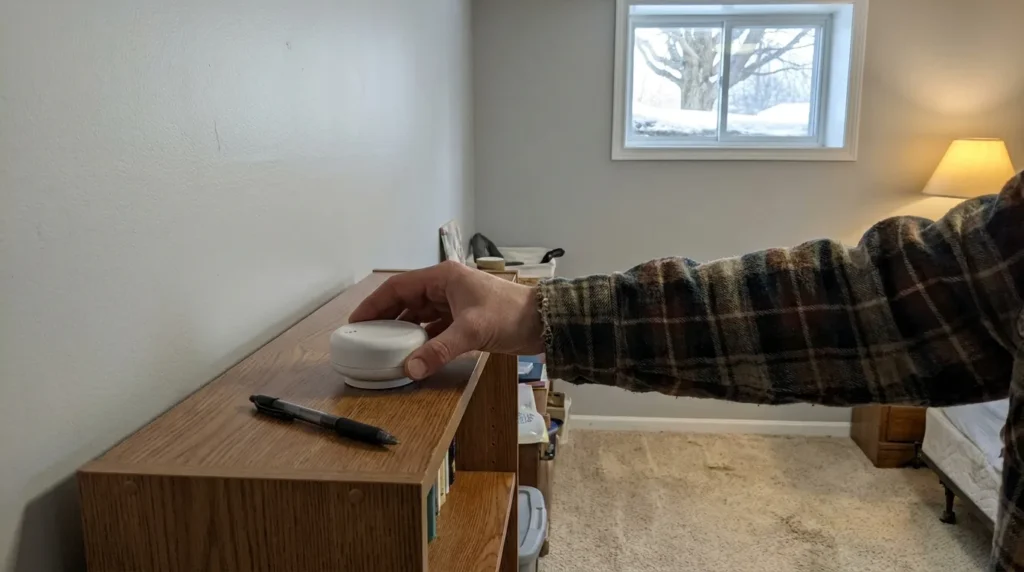
- Pick the floor. Use the lowest level where someone spends 4 or more hours a day, for example a finished basement family room or a basement bedroom. Bedrooms on the main floor or basement should be prioritized.
- Avoid the wrong rooms. Do not test in the kitchen, laundry room or bathrooms; Health Canada’s instructions also rule out closets and unfinished basements.
- Place it correctly. Put the device at breathing height (the instructions say 0.5 to 2 m from the floor), not touching the floor, ceiling or an exterior wall, and away from windows, doors and vents.
- Leave it alone. Keep it in the same spot for at least 3 months (up to 12 is fine).
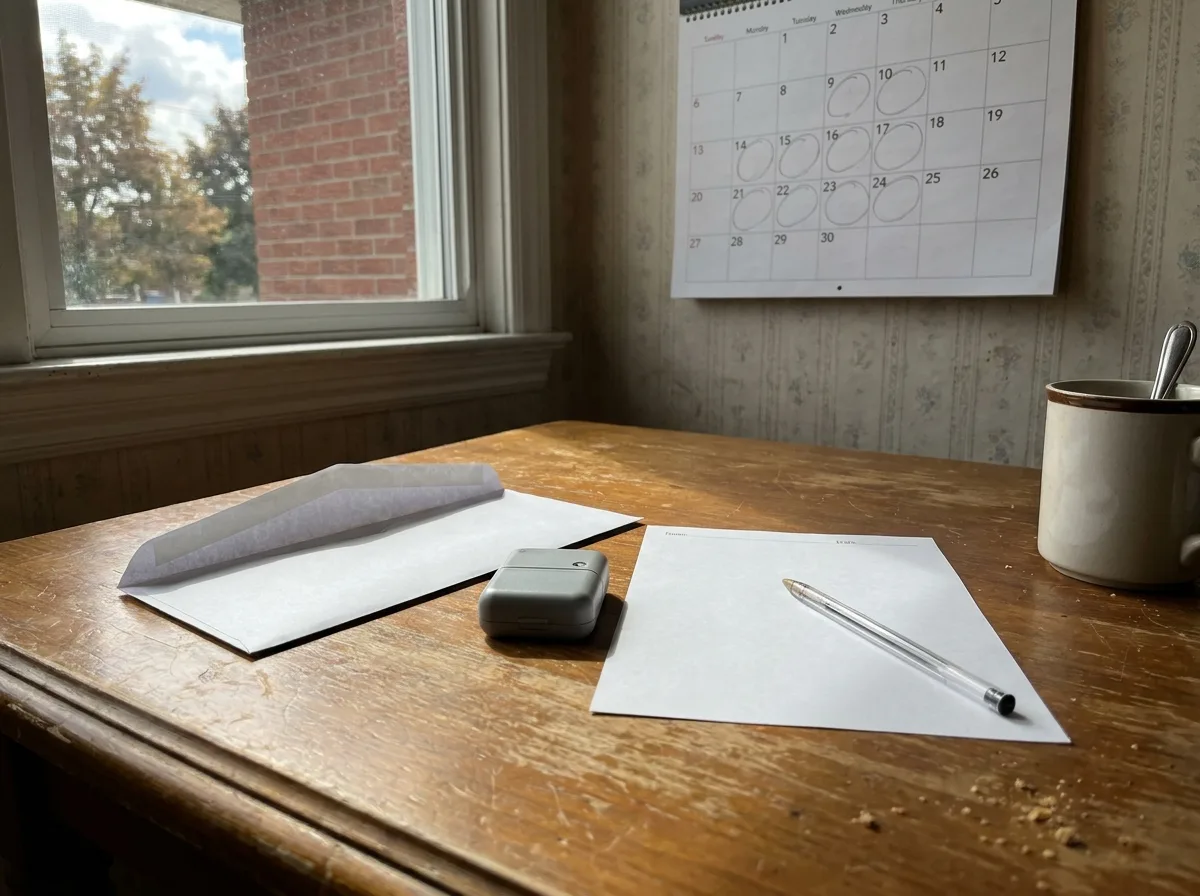
- Record the dates. Write the start and end dates on the form; a lab cannot calculate a valid average without them.
- Send or read the result. Mail an alpha-track kit to the lab promptly. With a monitor, note the long-term average at the end of the test, not a single daily reading.
RénoClair tip
Start your radon test before mid-December. A kit placed in early November in a basement bedroom finishes in early February with all 91+ days in the heating season, and you will have the result in time to book a certified mitigator before spring.
What your radon test numbers mean
Health Canada’s guideline is simple: if your long-term result is higher than 200 Bq/m³, reduce it within one year, and act sooner if the level is higher. Older pages from some public health units and associations still show a two-tier rule (fix within two years between 200 and 600 Bq/m³, one year above 600). That tier comes from earlier guidance; the current Health Canada guide no longer uses it.
| Long-term result (Bq/m³) | ≈ pCi/L | What to do |
|---|---|---|
| Under 100 | Under 2.7 | Low. Retest after major renovations or a change in how you use the basement. |
| 100 to 200 | 2.7 to 5.4 | Below the guideline. C-NRPP suggests considering a retest in another year or two. |
| Above 200 | Above 5.4 | Above the guideline: plan mitigation within 1 year. |
| 600 and up | 16.2 and up | Well above the guideline: Health Canada says act sooner when the level is higher, so book a certified professional now. |
The pCi/L column uses Health Canada’s conversion (37 Bq/m³ = 1 pCi/L). It helps if you are reading an American-made monitor or a US article: the units are different, and US thresholds are not the Canadian guideline.
Worked example: reading a 3-month digital monitor result
Suppose a family in a 1980s bungalow puts a C-NRPP-tested monitor in their basement bedroom on November 1. The monitor’s monthly averages come out at 150 Bq/m³ in November, 210 in December and 260 in January (illustrative numbers).
- After the first month alone, they might have concluded they were fine (150 Bq/m³ is under 200).
- The 3-month average is (150 + 210 + 260) ÷ 3 = 207 Bq/m³.
- That is above 200 Bq/m³, so under Health Canada’s guideline they should have the home mitigated within one year.
This is exactly why Health Canada rejects short tests for decisions: radon swings with weather, snow cover and furnace use. Read the long-term average over the full test, never a single day or week.
If your radon test is above 200: how mitigation works and what it costs
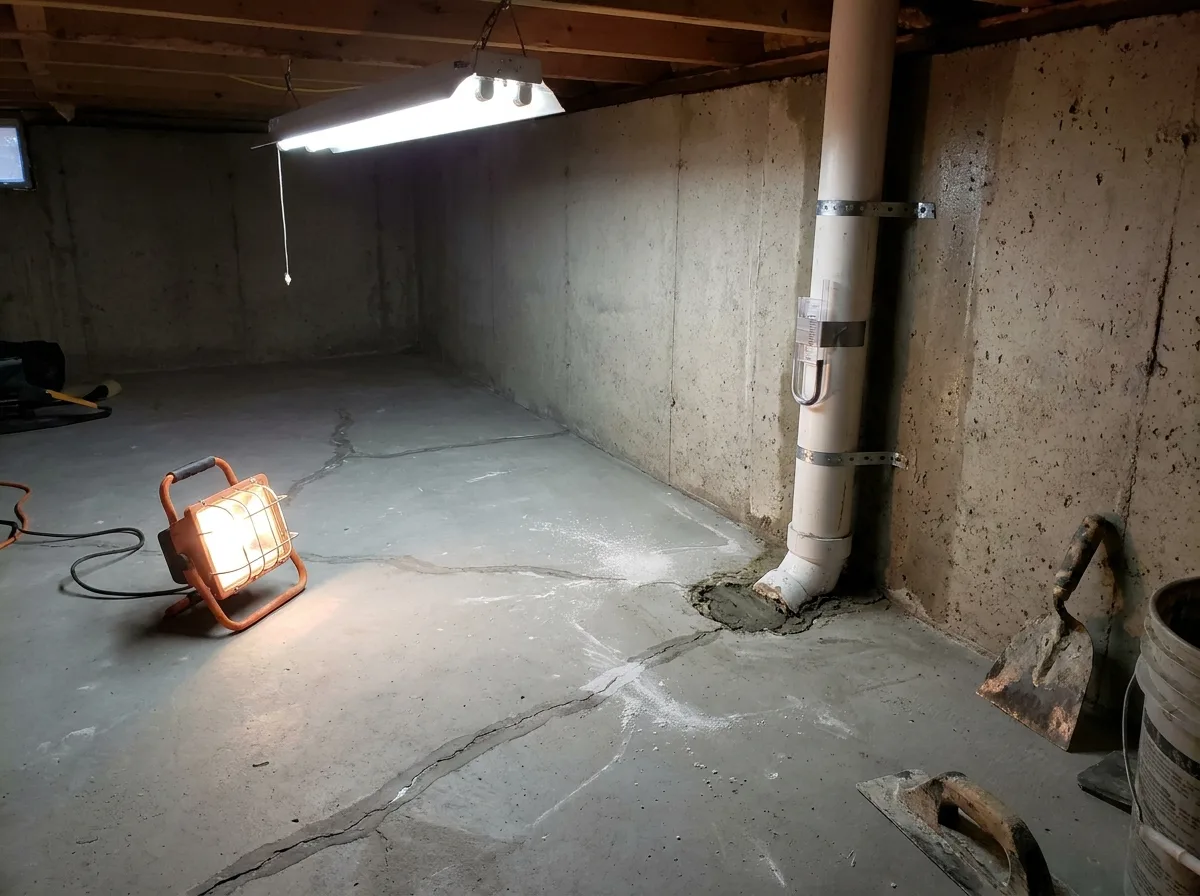
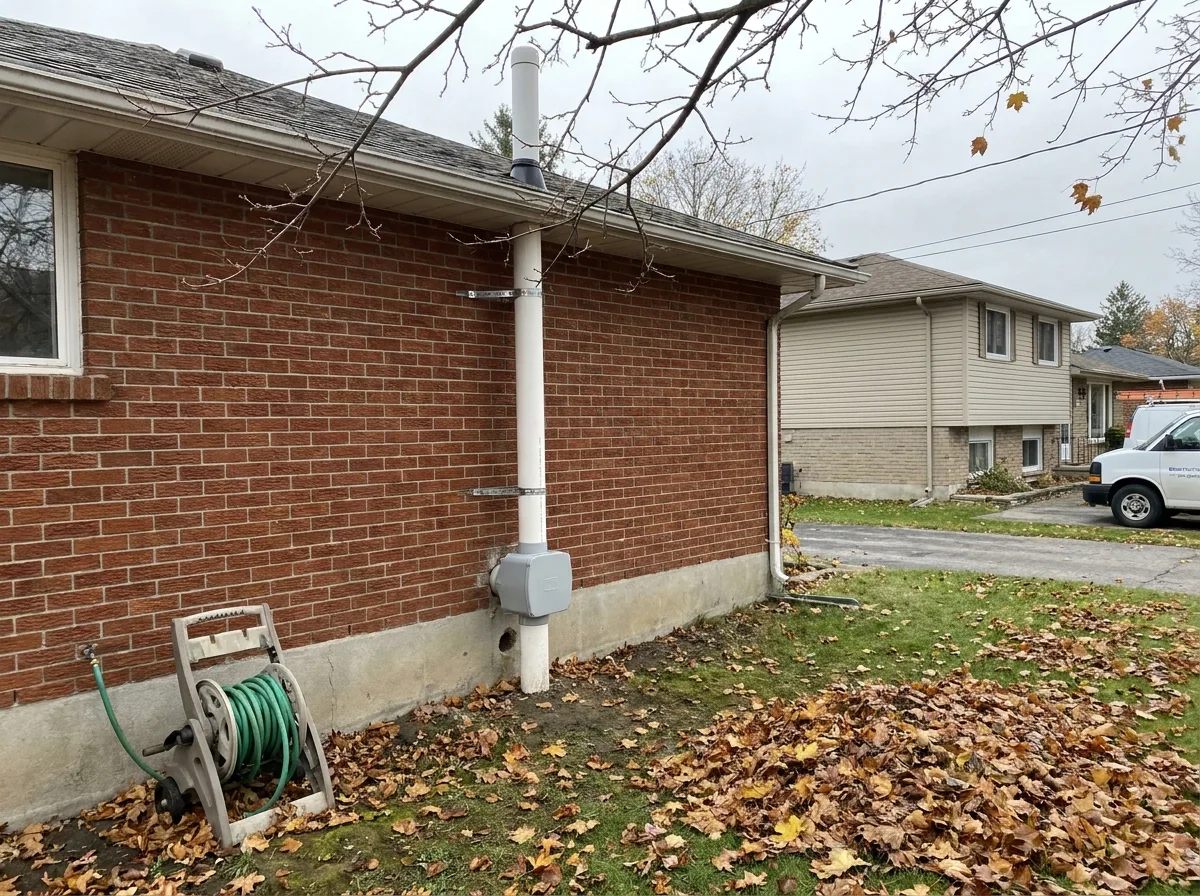
The standard fix is active soil depressurization (ASD): a contractor drills a hole through the basement slab, installs a pipe and a small fan that pulls soil gas from under the floor and vents it outside, and seals major openings. Health Canada’s Reduce radon in your home factsheet (updated September 2026) says this method typically lowers radon by more than 90%, that a system can usually be installed in less than a day, and that the cost is similar to other common home improvements. Increasing ventilation alone typically reduces radon by only 20% to 50%.
For a full breakdown of what each method costs, the fan’s running costs and a 10-year Ontario example, see our radon mitigation system cost guide.
Hire a C-NRPP certified mitigation professional; Health Canada, Tarion and the Lungs Matter grant all rely on that certification. On cost, Take Action on Radon (updated January 2026) reports an average of about $2,700 based on 2013–2021 data, while its more recent data shows systems ranging from $3,000 to $11,000. Prices depend on the house, so ask more than one certified professional for a written quote.
Our basement calculator uses a Québec range of $1,500 to $3,500 before tax for the “radon mitigation or sump pump” line. That is a Québec-only, before-tax estimate built from different sources, so it sits below the national figures above; for an Ontario budget, rely on written quotes from certified mitigators.
Worked example: year-one cost of testing and fixing radon in Ontario
Assumptions: one single-use long-term kit at the top of York Region’s range ($70), a second kit to retest after mitigation, a straightforward ASD system quoted at $3,000 (the low end of Take Action on Radon’s current range), and 13% HST on everything. Your quote may differ.
| Item | Without grant | With Lungs Matter grant |
|---|---|---|
| First radon test kit ($70 + HST) | $79.10 | $79.10 |
| ASD mitigation system ($3,000 + HST) | $3,390.00 | $3,390.00 |
| Retest kit after mitigation ($70 + HST) | $79.10 | $79.10 |
| Lungs Matter grant (maximum, if eligible) | $0.00 | −$1,500.00 |
| Total out of pocket | $3,548.20 | $2,048.20 |
So the realistic year-one bill for a simple house is about $3,548.20, or about $2,048.20 if the household qualifies for the full grant. If the system costs $11,000 (the top of the range), the installation alone becomes $12,430.00 with HST. Redo the calculation with your own basement size in our basement renovation cost calculator (currently based on Québec prices) and compare with your quotes.
Help with the cost: Lungs Matter grant, Tarion and the Ontario Building Code
Lungs Matter radon mitigation grant
The Canadian Lung Association’s Lungs Matter program (page updated October 16, 2026) offers up to $1,500 toward home radon mitigation. Applicants must have been diagnosed with lung cancer or come from a low- or moderate-income household (priority to low-income households); the household income limit listed for Ontario is $105,100. You need long-term test results (minimum 90 days) above 200 Bq/m³ from a C-NRPP certified kit and a quote from the C-NRPP certified professional who will do the work. If the mitigation is already done, you cannot apply, and funding is limited, so apply before booking the installation.
Tarion coverage for newer homes
Ontario is the only province where the new-home warranty includes radon. According to Tarion, the warranty covers remediation of radon above 200 Bq/m³ for up to seven years, with up to $50,000 of coverage, provided the test is done with a C-NRPP certified device or professional. If your home is under seven years old and your long-term test is high, contact your builder and Tarion before paying a contractor yourself.
What the 2024 Ontario Building Code changed
The HCRA guide states that the 2024 Ontario Building Code requires all new homes to include a radon rough-in pipe, which makes adding a fan later cheaper, but it also notes that builders are not required to test for radon. A rough-in does not mean your new home is below 200 Bq/m³: you still need a long-term test.
After mitigation: retesting and renovations
Health Canada asks you to do a long-term test in the same location during the first heating season after installation, then to retest homes with an active system every 5 years. The HCRA guide adds that it is best to retest after any renovation. That includes finishing or insulating a basement, replacing windows or air sealing (a home energy audit often leads to that work), since a tighter house can change how soil gas moves; our guide to basement insulation in Canada covers that kind of project. Add the retest dates to your winter home maintenance checklist.
Radon detectors and carbon monoxide alarms are not the same thing: a CO alarm does not measure radon, and a radon monitor does not replace the CO alarms Ontario requires (see our carbon monoxide detector law guide). Readers in Québec can see our radon detector guide (in French) for Québec programs.
Common radon test mistakes
- Testing for 2 to 7 days and treating the result as final.
- Starting in late spring or summer, so fewer than 91 days fall in the heating season.
- Placing the detector in a kitchen, bathroom, laundry room, closet or unfinished basement.
- Putting it on the floor, against an exterior wall, or next to a window, door or vent.
- Reading a monitor’s daily number instead of its long-term average.
- Forgetting to note the start and end dates, or mailing an alpha-track kit weeks late.
- Paying for mitigation before applying to Lungs Matter or contacting Tarion.
- Skipping the retest after mitigation or after a basement renovation.
Frequently asked questions
How long does a radon test take in Canada?
At least 3 months. Health Canada recommends 3 to 12 months, with at least 91 days during the heating season; short tests of a few days are not appropriate for deciding whether to fix your home.
What radon level is dangerous?
There is no completely safe level, but Canada’s guideline is 200 Bq/m³. If your long-term result is higher, Health Canada recommends reducing it within one year, and sooner if the level is higher.
How much does a radon test kit cost in Ontario?
York Region public health puts single-use kits at about $45 to $70, plus possible lab fees. Some libraries and health units lend monitors during the heating season.
Are digital radon monitors accurate enough?
Yes, if the model has passed C-NRPP performance testing and you use its average over at least 3 months. Health Canada suggests replacing a monitor 5 years after purchase unless it is recalibrated.
Where should I put a radon test kit?
On the lowest level where someone spends at least 4 hours a day, at breathing height, away from windows, doors, vents and exterior walls. Avoid kitchens, bathrooms and laundry rooms.
How much does radon mitigation cost?
Take Action on Radon reports an average of about $2,700 (2013–2021 data) and a recent range of $3,000 to $11,000. A quick ballpark is possible with our basement renovation cost calculator (currently based on Québec prices).
Do new homes in Ontario need a radon test?
Yes, testing is still recommended. The 2024 Ontario Building Code requires a radon rough-in pipe but not a test, and Tarion covers remediation above 200 Bq/m³ for up to seven years.
Is a radon test the same as a carbon monoxide detector?
No. A radon test measures radioactive soil gas over months; a CO alarm sounds when a combustion gas builds up. You need both.
The bottom line
A radon test is cheap and simple: a C-NRPP tested long-term kit or monitor, placed on your lowest lived-in level for at least 91 heating-season days, tells you whether you are under or over Health Canada’s 200 Bq/m³ guideline. Above it, plan an active soil depressurization system within a year, check Lungs Matter or Tarion before you pay, and retest afterwards and every five years. For a rough budget, our basement renovation cost calculator gives a Québec-based ballpark.
Sources
- Health Canada, Guide for radon measurements in homes (updated May 22, 2026; read November 8, 2026)
- Health Canada, How to test your home for radon (updated September 14, 2026)
- Health Canada, Reduce radon in your home (updated September 22, 2026)
- Health Canada, About radon (updated September 24, 2025)
- Home Construction Regulatory Authority (HCRA), Radon consumer guide (October 2025)
- Tarion, Radon and your warranty (read November 8, 2026)
- Canadian Lung Association, Lungs Matter radon mitigation support (updated October 16, 2026)
- Take Action on Radon, Reducing radon (updated January 6, 2026) and lending programs (updated April 17, 2026)
- C-NRPP, Steps to reduce radon (read November 8, 2026)
- York Region, Radon: test your home (updated October 30, 2025; quotes Public Health Ontario)


