Official sources checked on November 5, 2026. Contractor and retailer prices read in October and November 2026.
The mini split heat pump cost in Canada is usually about $3,500 to $9,000 installed for a single-zone system (one outdoor unit, one indoor head) and $5,500 to $22,000 for a multi-zone system, with most two- to four-head jobs quoted between $8,000 and $15,000, before sales tax and rebates. In Ontario, the Home Renovation Savings program pays $1,250 per ton (up to $7,500) in homes heated by electricity, oil, propane or wood, and $500 per ton (up to $2,000) in Enbridge gas homes, but only with pre-approval and a participating contractor.
This guide breaks the price down by system type and line item, shows two worked examples with 13% HST and rebates, and explains why a small single-room unit can miss both the Ontario rebate and the new federal rebate.
In this guide
Mini split heat pump cost at a glance
The ranges below are installed prices, before tax and rebates, from published price pages of Canadian HVAC contractors and retailers. They are a starting point for comparing quotes, not a quote for your home.
| System | Typical installed price (before tax) | Best for | Rebate notes (Ontario) |
|---|---|---|---|
| Single-zone, 1 indoor head | $3,500 to $9,000 (most quotes $4,500 to $7,500) | One room, an addition, a finished basement or an open main floor | Cold-climate model on the NRCan list; capacity rules apply |
| Multi-zone, 2 to 4 indoor heads | $5,500 to $22,000 (most quotes $8,000 to $15,000) | Homes without ducts, such as baseboard-heated bungalows | Rebate is based on total rated heating capacity |
| Several single-zone systems | Sum of each single-zone quote | Rooms far apart or on different floors | Program caps apply to the whole home |
| Electrical panel upgrade (if needed) | Often $1,500 to $4,000, up to about $5,500 | Older 60 A or 100 A services | Not covered by the heat pump rebate |
| Promotional single-zone bundles | From about $3,300 installed | Simple back-to-back installations | Check the model is cold-climate before counting on a rebate |
How these ranges were built: RénoClair compared the published installed prices of eight Ontario HVAC contractors and retailers (Toronto, Mississauga, Vaughan, Durham Region and Ottawa, read October 17, 2026), one national installer’s 2026 ductless guide and two province-specific price pages for Alberta and British Columbia (read November 5, 2026). The lowest and highest published figures set the range; the “most quotes” band is where the majority of sources overlap. Search volumes and company names are not shown because RénoClair is a neutral guide.
What a ductless heat pump is, and what you are paying for
A ductless heat pump moves heat with refrigerant lines instead of air ducts. Natural Resources Canada describes a mini-split as “a single indoor unit … served by a single outdoor unit” and a multi-split as multiple indoor units “served by a single outdoor unit” (NRCan, Heating and cooling with a heat pump, modified December 24, 2025). Mini-splits typically heat and cool “a single room”, according to NRCan’s heat pump basics page.
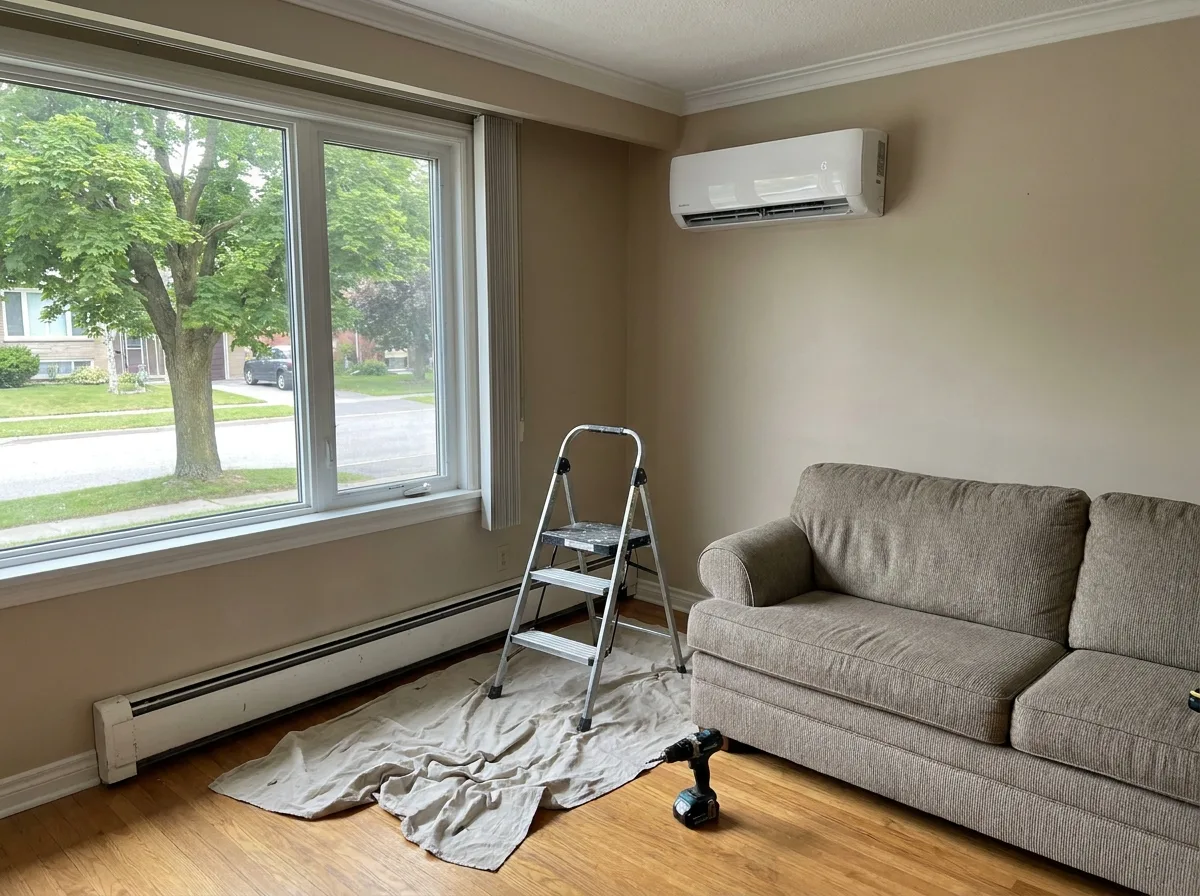
A typical ductless quote includes these parts:
- Outdoor unit (compressor), sized in BTU/h or tons; 12,000 BTU/h equals 1 ton.
- Indoor head(s): wall-mounted is the cheapest; ceiling cassettes, floor consoles and slim ducted heads usually cost more.
- Line set: insulated copper refrigerant lines, communication wire and a condensate drain between the units. Quotes usually include a standard length; extra length is billed separately.
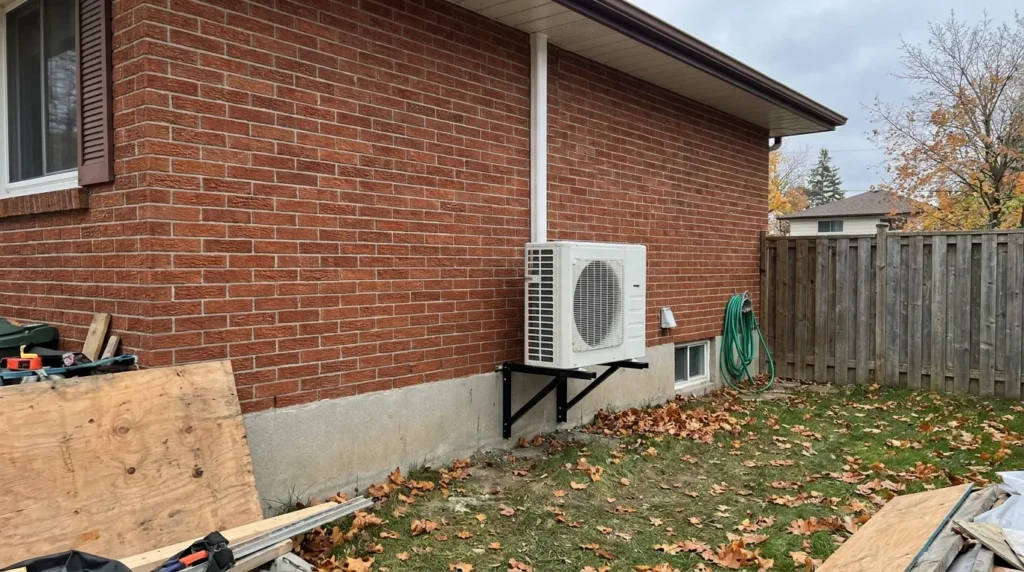
- Mounting: a wall bracket or a raised stand or pad so the unit stays above snow.
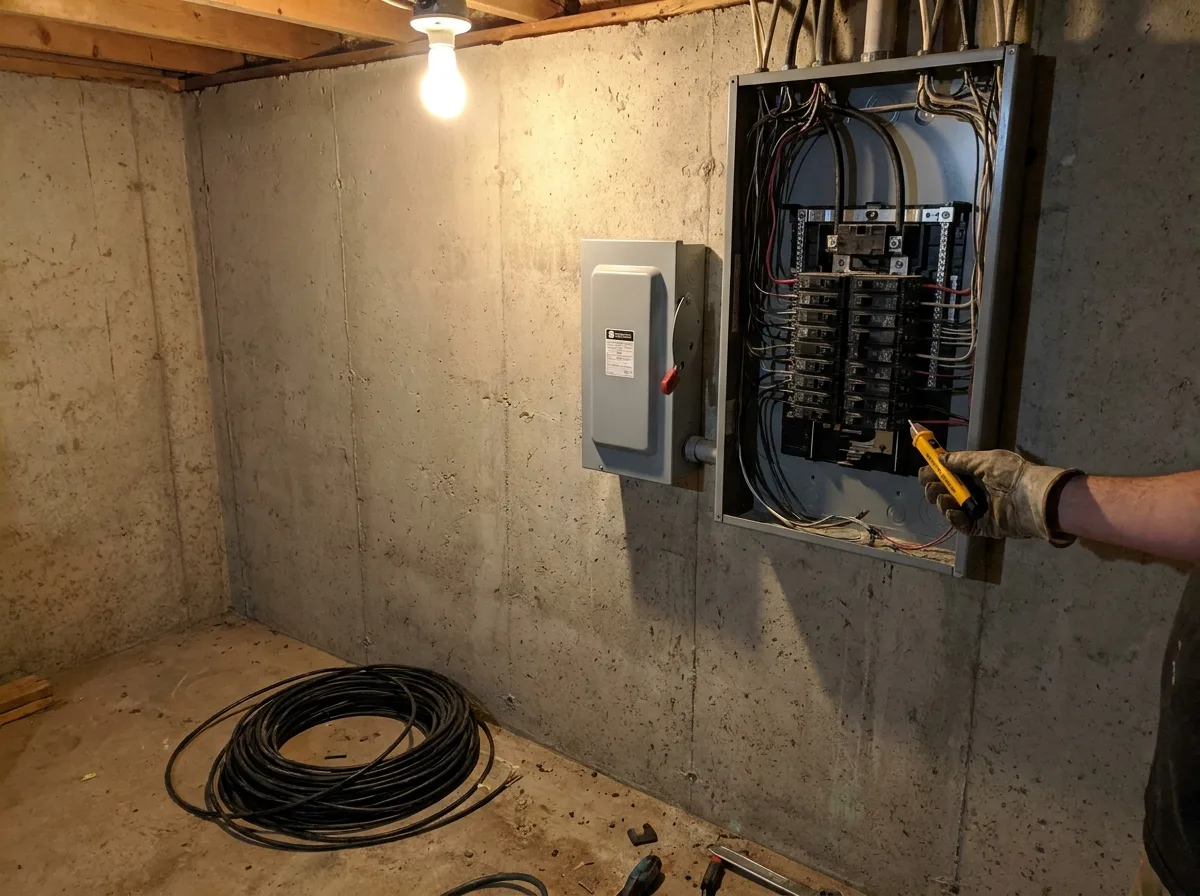
- Electrical work: a dedicated 240 V circuit and disconnect, and sometimes a panel upgrade.
- Labour, vacuum and refrigerant charge, start-up and permits.
RénoClair tip
Ask every contractor to list the outdoor model, each indoor model, the included line-set length and the electrical scope on the quote. Two quotes with the same total can cover very different work.
Single-zone vs multi-zone mini split cost
Conclusion first: a single-zone system is the cheapest way to heat and cool one space; a multi-zone system costs more in total but less per room than several separate systems in many homes. The right choice depends on how many rooms need heat and how far apart they are.
Single-zone: $3,500 to $9,000
One outdoor unit feeds one indoor head. Published ranges started at about $3,500 in Ontario, $4,000 to $6,000 in British Columbia and $4,500 to $8,000 in Alberta; one national installer listed $5,999 to $7,500 and up. Prices rise with cold-climate models, longer line runs, a second-storey head and a new electrical circuit.
Multi-zone: $5,500 to $22,000
One outdoor unit feeds two to four (sometimes more) indoor heads. Ontario price pages showed $8,000 to $15,000 for most jobs, an Alberta page showed $7,000 to $16,000 and up for two or three heads, and the national guide showed $9,500 to $22,000 and up. Each extra head adds equipment, a line set and a wall penetration.
One multi-zone or several single-zones?
- Multi-zone usually wins when rooms are close together and one outdoor location can reach them all with short line runs.
- Several single-zones can make sense when rooms are on opposite sides of the house, when you want full redundancy (one failure does not shut down every room), or when you plan to add rooms over several years.
- Compare quotes on the same design: the same rooms, heat output at cold temperatures and line-set lengths, not just the number of heads.
What drives the price up or down
- Cold-climate rating. Cold-climate units cost more but keep heating in deep cold. NRCan says newer models have minimum operating temperatures “between -15°C to -25°C”, and cold-climate heat pumps can work “down to -30°C”.
- Capacity and number of heads. Every head adds hardware and labour. Oversizing also hurts: NRCan recommends that “a heating and cooling professional be retained to undertake the required calculations” (sizing standard CSA F280-12).
- Line-set length and route. Long runs, a second storey, finished ceilings and masonry walls add hours.
- Electrical capacity. A dedicated circuit is normal; a panel upgrade, when needed, often adds $1,500 to $4,000.
- Indoor head style. Ceiling cassettes and ducted heads cost more than wall-mounted heads.
- Region and season. Spring and fall are usually busier for installers; remote areas add travel.
- Permits. In Ontario, the Electrical Safety Authority says the code “requires almost all electrical work be reported” through a notification of work, and that “having a building permit isn’t the same as filing an electrical notification. You may need both” (ESA, What you need to know).
Rebates that lower the mini split heat pump cost
Conclusion first: in Ontario, a cold-climate mini split can earn up to $7,500 in a non-gas home through Home Renovation Savings. The federal National Heat Pump Rebate has been announced but is not open yet, and it targets systems that heat the whole home.
Ontario: Home Renovation Savings
| Home’s main heating before installation | Cold-climate air-source rebate | Maximum |
|---|---|---|
| Electricity, oil, propane or wood | $1,250 per ton | $7,500 |
| Enbridge natural gas | $500 per ton | $2,000 |
Source: Home Renovation Savings heat pump page (read November 5, 2026; the page shows no update date). Key rules quoted on that page:
- “Pre-approval is mandatory. Installations done before approval are not eligible for rebates.”
- The rebate is “calculated based on the total rated heating capacity at 8.3C (47F).”
- The unit “must be an active model that is listed on Natural Resources Canada’s qualified products list” for cold-climate air-source heat pumps.
- A participating HVAC contractor submits the application, and the cheque “should arrive by mail within 60 days” after the post-installation application is approved.
The program requirements (version dated May 2025) add two rules that matter for mini splits: the heat pump must be the home’s first heating heat pump (replacements do not qualify), and the equipment needs a rated heating capacity of at least 12,000 BTU/h at 8.3°C, with up to three cold-climate units combined per home. A small 9,000 BTU/h single-room unit can therefore miss the rebate entirely. See our Ontario heat pump rebate guide for the full eligibility list.
Ontario: free heat pumps for income-eligible homes
The Energy Affordability Program says homes heated by electricity or oil that meet the income limits may receive a cold-climate heat pump system at no cost (phone 1-844-770-3148). Our Energy Affordability Program guide explains the income table.
Federal: National Heat Pump Rebate (announced, not open)
According to the Government of Canada program page (modified November 4, 2026), households above the median income “may be eligible for a rebate of $2,000” and households below it “up to $10,000”. The portal is expected “in early 2027”, and installations from November 1, 2026 may qualify for a retroactive rebate once it opens. The page describes eligible systems as heat pumps “that can heat your entire home”, listed by AHRI number, purchased from and installed by an HVAC contractor. It also states that “program parameters and eligibility criteria are still being finalized”, so a single-room mini split may not qualify. Keep every receipt and the AHRI certificate.
Other provinces run their own utility or provincial programs with different amounts. Check your province’s official energy-efficiency program before signing; this guide only details Ontario and federal rules verified on the official pages above.
Two worked examples: from quote to net cost
Both examples use illustrative quotes inside the published ranges and Ontario’s 13% HST, as listed on the CRA GST/HST rates page. Rebates are paid after the work, so you pay the full price first.
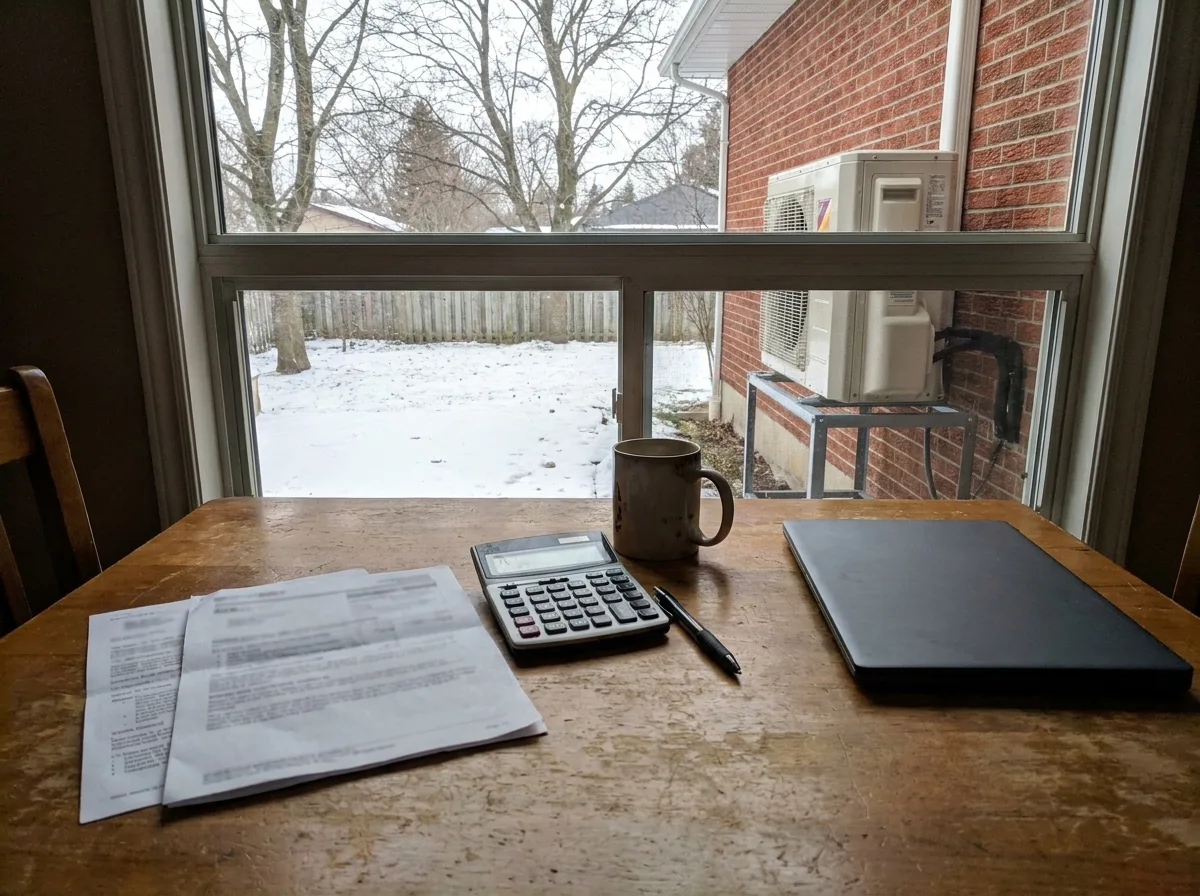
Example 1: baseboard-heated bungalow, 3-head multi-zone
| Item | Amount |
|---|---|
| Cold-climate multi-zone system, 3 heads, 3.0 tons total rated capacity at 8.3°C, installed | $13,000 |
| HST (13%) | $1,690 |
| Total paid | $14,690 |
| Home Renovation Savings (non-gas home): 3.0 tons × $1,250 | − $3,750 |
| Net cost after Ontario rebate | $10,940 |
| If the federal $2,000 rebate is confirmed for this system | $8,940 |
If the same house also needs a $2,500 panel upgrade, the total paid becomes $17,515 and the net cost after the Ontario rebate becomes $13,765. The Ontario rebate does not grow, because it is based on heating capacity, not on the invoice.
Example 2: Enbridge gas home, one single-zone head for a cold addition
| Item | Amount |
|---|---|
| Cold-climate single-zone system, 12,000 BTU/h (1.0 ton) rated at 8.3°C, installed | $5,500 |
| HST (13%) | $715 |
| Total paid | $6,215 |
| Home Renovation Savings (Enbridge gas home): 1.0 ton × $500 | − $500 |
| Net cost after Ontario rebate | $5,715 |
In a home heated by electricity, oil, propane or wood, the same unit would earn $1,250 instead of $500, for a net cost of $4,965. This single room unit does not heat the entire home, so it should not be counted on for the federal rebate.
RénoClair tip
Compare the examples per head: Example 1 costs about $3,647 per heated zone after the rebate, against $5,715 for the single zone in Example 2. Grouping rooms on one outdoor unit often lowers the cost per room.
Checklist before you sign a mini split quote
- The outdoor and indoor model numbers, and the AHRI reference for the combination.
- Confirmation the model is on the NRCan cold-climate list if you want an Ontario or federal rebate.
- Rated heating capacity at 8.3°C (for Ontario) and at -15°C (for real winter comfort).
- A written heat-loss or sizing calculation for each room.
- Line-set length included, price per extra foot, and the route on the house.
- Electrical scope: new circuit, disconnect, panel capacity check, ESA notification.
- Mounting: wall bracket or stand high enough above the snow line, and where the condensate drains.
- Pre-approval number before any work starts, if you apply for Home Renovation Savings.
- Warranty: parts, compressor and labour, and who provides it.
- HST shown separately and a payment schedule tied to completion.
Common mistakes that raise the cost
- Installing before pre-approval. Home Renovation Savings refuses installations done before approval.
- Buying a non-cold-climate unit. It may be cheaper but earns no Ontario rebate and loses heat output in deep cold.
- Comparing totals instead of designs. A cheaper quote may have fewer heads, smaller capacity or a short line set.
- Do-it-yourself kits. Both the Ontario and federal programs require a contractor installation, so a DIY install gives up the rebates.
- Skipping maintenance. NRCan advises cleaning or changing filters about every three months; see our heat pump maintenance guide.
For ducted, hybrid and geothermal prices in Ontario, see our guide to the heat pump cost in Ontario.
To estimate the installed price before rebates tailored to your home’s size and configuration, use our heat pump cost calculator (typical 18k BTU cold-climate unit: $4,300 to $6,450, with the detailed budget as a PDF).
Frequently asked questions
What is the average mini split heat pump cost in Canada?
Most single-zone mini splits cost about $4,500 to $7,500 installed, within a full range of about $3,500 to $9,000, before tax and rebates. Multi-zone systems usually cost $8,000 to $15,000, with complex jobs up to about $22,000.
How much does a ductless heat pump cost per zone?
Roughly $3,500 to $9,000 for the first zone. Each additional head on a multi-zone system adds equipment, a line set and labour, so a 3-head system is often quoted between $8,000 and $15,000.
Can a ductless mini split heat a whole house in Canada?
Yes, in many homes a multi-zone cold-climate system can, but it needs a room-by-room sizing calculation. NRCan notes that newer models operate down to about -15°C to -25°C, and many homes keep backup heat for the coldest days.
Does a mini split qualify for the Ontario heat pump rebate?
Yes, if it is a cold-climate model on the NRCan list, it is your first heating heat pump, the rated capacity meets the minimum, and a participating contractor gets pre-approval first. The rebate is $1,250 per ton up to $7,500, or $500 per ton up to $2,000 in Enbridge gas homes.
Is the federal $10,000 heat pump rebate available for mini splits?
Not yet. The National Heat Pump Rebate portal is expected in early 2027, and the program page describes systems that heat the entire home. A single-room mini split may not qualify; details are still being finalized.
Is HST included in mini split prices?
Usually not. Most published price ranges are before tax. In Ontario, add 13% HST: a $5,500 quote becomes $6,215.
Can I install a mini split myself to save money?
You can buy DIY kits, but Ontario’s Home Renovation Savings and the federal rebate both require installation by an HVAC contractor, and electrical work must be reported to the ESA in Ontario. A DIY install gives up those rebates.
New federal money may also apply to a mini split: see the federal heat pump rebate for amounts, Ontario income limits and the 2027 application timeline.
The bottom line
In 2026, budget about $3,500 to $9,000 for a single-zone mini split heat pump and $8,000 to $15,000 for most multi-zone systems in Canada, plus sales tax. In Ontario, a cold-climate unit with pre-approval can bring the net price down by up to $7,500 in a non-gas home. Wait for the federal portal before counting on its rebate, and choose a design that heats the rooms you actually use.
Sources
- Home Renovation Savings, Heat pumps (no update date shown; read November 5, 2026).
- Government of Canada, National Heat Pump Rebate (modified November 4, 2026; read November 5, 2026).
- Natural Resources Canada, Heating and cooling with a heat pump (modified December 24, 2025; read November 5, 2026).
- Natural Resources Canada, Heat pump basics (modified July 21, 2025; read November 5, 2026).
- Save on Energy, Energy Affordability Program (read November 5, 2026).
- Electrical Safety Authority, What you need to know (read November 5, 2026).
- Canada Revenue Agency, GST/HST rates (read November 5, 2026).
- Installed prices: published price pages of eight Ontario HVAC contractors and retailers (October 17, 2026), one national installer and two Alberta and British Columbia price pages (November 5, 2026).