Official sources checked on November 23, 2026.
Home generator installation in Canada costs $2,600 to $5,000 before tax for a 6,500–8,500 W portable unit wired to a 30A manual transfer switch, or $9,500 to $19,500+ before tax for an automatic 14–22 kW standby system. Check your 100A/200A panel allowance first in our electrical panel upgrade cost calculator.
In this guide
Home generator installation costs in Canada: portable vs. standby
Homeowners across Ontario, Quebec, BC and Alberta choose between three backup setups: an indoor LiFePO4 battery station, a portable inverter generator with a 30A transfer switch (or utility-approved meter collar), or an automatic air-cooled standby generator (12–26 kW) on natural gas or propane. Ranges reflect published Canadian contractor and equipment pricing (November 2026, before tax).
| Backup power option | Typical output | Installed cost before tax | Start-up & runtime | Annual upkeep |
|---|---|---|---|---|
| Indoor LiFePO4 battery station | 1,500–3,600 W (1–3 kWh) | $800 to $3,200 | Instant; 4–14 hrs | $0 |
| Portable inverter + 30A manual switch | 6,500–8,500 W surge | $2,600 to $5,000 | Manual (5 min); 8–12 hrs | $75 to $150 |
| Portable + approved meter collar* | 7,000–9,500 W (30A/40A) | $2,900 to $5,400 | Manual plug-in at meter | $75 to $150 |
| Standby essential circuits (12–16 kW) | 12,000–16,000 W | $9,500 to $14,000 | Automatic (10–20 s) | $250 to $400 |
| Standby whole-home (18–26 kW) | 18,000–26,000 W | $12,000 to $19,500+ | Automatic + load shed | $300 to $450 |
*Meter-mounted transfer collars require written local utility approval (offered by select Ontario LDCs, not permitted by all utilities or Hydro-Québec).
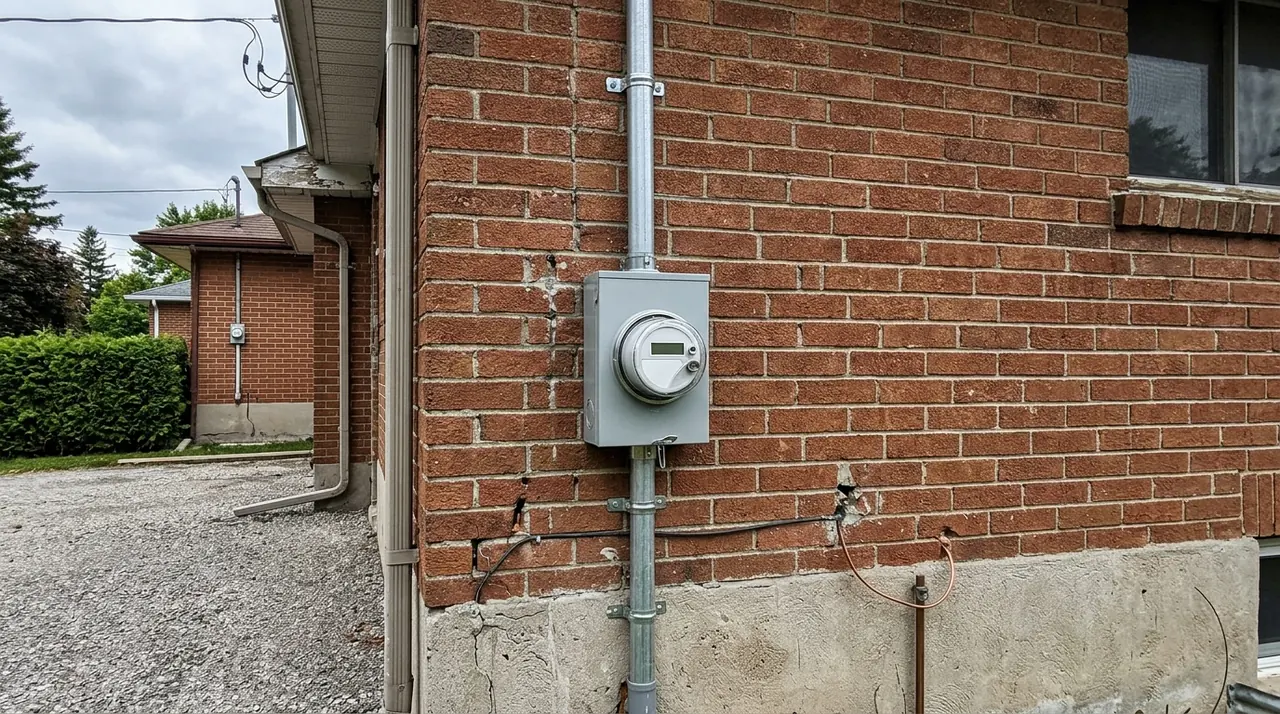
On a standby job, the generator and automatic transfer switch (ATS) represent 55% to 62% of the total; electrical wiring, gas piping, pad prep and panel capacity drive the rest. Aligned with our 4-province electrical panel dataset (2026.Q4-panel-1, November 2026), a 100A to 200A upgrade costs $2,500 to $5,000 in Ontario and Alberta (typical $3,600), $2,500 to $4,500 in Quebec ($3,400), and $2,700 to $5,400 in BC ($3,900); a 100A sub-panel averages $1,650–$1,950 and a Type 2 surge protector adds $375–$425. See our 200 amp panel upgrade cost guide for full scope details.
Sizing your generator: running watts vs. starting surge
Adding only running watts trips breakers the moment motors cycle: a 1/2 HP sump pump draws 800 W running but surges to 2,000 W for 1–2 seconds on start-up. Sum simultaneous running loads, add only the single largest surge delta, then multiply by 1.25 so the generator stays at or below 80% continuous load.
| Household load (Canada) | Running watts | Starting watts | Outage priority |
|---|---|---|---|
| Gas furnace blower + controls (or HRV) | 600 W | 1,400 W | Critical (freeze protection) |
| Refrigerator + chest freezer | 400 W | 1,800 W | Critical (after 4–6 hrs) |
| Sump pump (1/2 HP) | 800 W | 2,000 W | Critical (thaw / rain) |
| Submersible well pump (3/4 HP, rural) | 1,000 W | 2,600 W | Critical off city water |
| LED lights, router, laptops (6 circuits) | 450 W | 450 W | Essential comfort |
| 1,500 W space heater or microwave | 1,500 W | 1,500 W | Intermittent (one at a time) |
- Suburban home (gas furnace + city water): 3,750 W running + 1,400 W max surge delta = 5,150 W peak. Adding 25% headroom points to a 6,500 W running / 7,500–8,500 W starting portable inverter.
- Rural home (well pump + sump pump + furnace): 4,750 W running + 1,600 W max surge delta = 6,350 W peak. With 25% margin, size at least 7,500–8,000 W continuous (9,000–10,000 W surge) or a 14–18 kW standby unit.
- Electric baseboard / heat-pump homes: Deep-cold resistance heat draws 12–18 kW alone. Shed non-essential heating circuits on a standby ATS or prioritize essential circuits alongside your furnace or safe backup heating plan.
Transfer switch permits, gas codes and CO clearances in Canada
Backfeeding a dryer outlet with a male-to-male cord is illegal across Canada: power steps up through street transformers to lethal voltages for utility crews and destroys your panel when grid power returns.
- Ontario (ESA & TSSA): Transfer switches, interlocks and standby units require an electrical Notification of Work from the Electrical Safety Authority (ESA), Canadian-certified gear (CSA/cUL) and an ECRA/ESA Licensed Electrical Contractor if hired. Gas lines require a TSSA-registered fitter under CSA B149.1; TSSA pad guidance specifies compacted gravel and a non-combustible base at least 2 inches above grade when manufacturer specs are silent.
- Quebec (CMEQ & RBQ): Unlike Ontario where factory-approved interlocks may pass inspection, the CMEQ enforces Quebec Electrical Code articles 2-024 and 10-904, which ban bolt-on aftermarket interlock kits on standard panels; a separate CSA transfer switch or factory-certified generator panel is mandatory.
- BC & Alberta: Electrical permits run through Technical Safety BC (or municipal delegates) and Alberta Safety Codes agencies, with licensed gas fitters enforcing CSA B149.1 Table 5.3 regulator and vent clearances.
- Carbon monoxide clearance: Never run fuel-burning generators inside a home, shed or garage (even door open). Health Canada advises keeping portables at least 6 metres (20 feet) from buildings and intakes, exhaust pointed away, with battery-backed alarms — see our carbon monoxide detector law in Ontario guide.
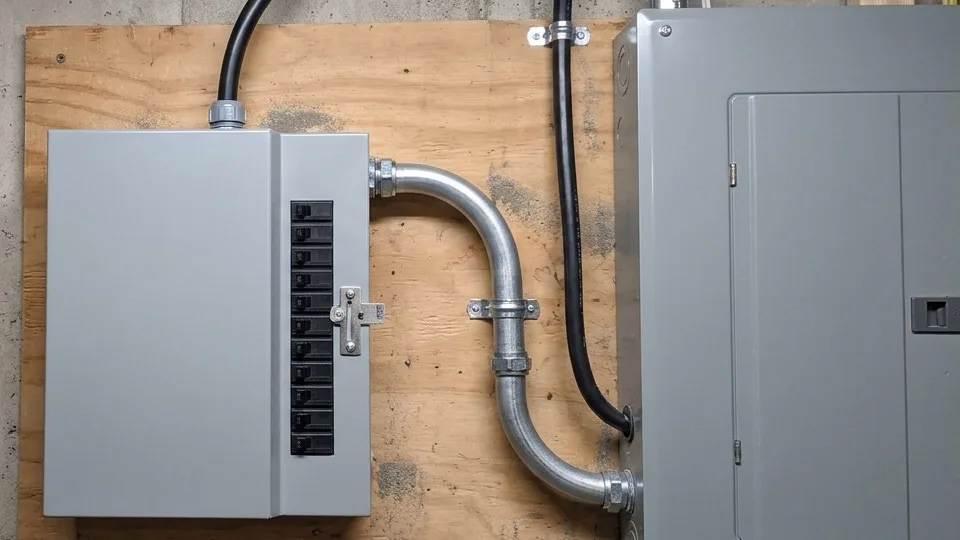
RénoClair tip: Confirm whether your portable generator uses a bonded or floating neutral before ordering a manual transfer switch. Bonded-neutral portables generally require a 3-pole switched-neutral transfer switch to avoid parallel neutral-ground paths that nuisance-trip GFCI breakers.
When NOT to spend $13,000 to $18,000 on a standby generator
Whole-home standby systems are one of the most common post-storm overspends. Beyond $15,900–$20,000 tax-in upfront, weekly self-tests and annual servicing ($250–$450/yr) add $3,500 to $5,000 over 10 years even with minimal outages.
- Urban home, under 2 short outages/yr (under 4–6 hours), no sump/well pump: A 1.5–2 kWh LiFePO4 battery station ($900–$1,900, silent, indoor-safe, no permit) runs fridge, Wi-Fi and a furnace blower without fuel.
- Occasional 12–48 hour storms when you are home: A 7,500 W dual-fuel inverter portable + 30A manual transfer switch totals roughly $4,460 tax-in (Ontario) — saving $11,400 to $15,500.
- Propane-only rural sites with rare outages: At -20 °C, a 22 kW standby needs twin 420-lb tanks or a 500-US-gal tank for winter vaporization; weigh tank leases alongside your winter home maintenance checklist.
- When standby makes sense: Submersible well pumps, high-water sump basements, multi-day rural feeders, winter travel absences or continuous medical power needs.
2-minute homeowner pre-quote self-check
- Main breaker rating and open slots: Check 100A vs. 200A; a full 100A panel triggers a $1,250–$2,650 sub-panel or $2,500–$5,400 200A upgrade.
- Gas meter CFH nameplate: Older 250 CFH natural gas meters often cannot feed both a furnace and a 20–22 kW generator (240–300 CFH), requiring a utility meter swap (4–8 week lead time).
- Tape-measure clearances: Verify 1.5 m (5 ft) from operable windows/doors/intakes, CSA B149.1 Table 5.3 regulator spacing and municipal side-yard/noise rules (often 50–55 dBA at lot line).
- Critical breakers list: Flag furnace, sump, well, fridge/freezer and any 240 V double-pole essential circuits.
- CO alarm expiry dates: Confirm every floor has a battery-backed CO alarm under 7–10 years old.
5 hidden traps in a lowball generator quote
- 1. Utility gas meter upgrade omitted: Upgrading a 250 CFH meter to 400+ CFH adds $500–$1,200 and weeks of utility delay.
- 2. Gas piping capped at 10–15 feet: Crossing a basement or trenching an extra 25–40 ft adds $500 to $1,500+.
- 3. Missing ESA/TSSA permits or non-CSA parts: Skipping permits saves $250–$500 upfront but jeopardizes home insurance and resale inspections.
- 4. 100A-to-200A upgrade or load-shedding modules excluded: Adding a 200A ATS without load-management modules ($250–$400 each) or a panel upgrade ($2,500–$5,400 by province) fails CEC Section 8-200 load calculations.
- 5. Cold-weather kit and elevated pad excluded: Omitting the battery/oil warmer ($250–$450) and compacted gravel + concrete pad ($300–$800, ≥2 in. above grade) invites January crank failures below -15 °C.
Worked tax-included examples (Ontario, BC and Alberta)
Realistic November 2026 budgets aligned with our 4-province electrical panel dataset (2026.Q4-panel-1), including 13% Ontario HST (plus BC and Alberta 5% GST comparisons):
| Line item (November 2026, CAD) | Scenario A: 1,500 sq ft ON bungalow (7,500 W portable + 30A) | Scenario B: 2,200 sq ft ON 2-storey (22 kW NG + 200A ATS) |
|---|---|---|
| Generator + transfer gear | $1,850 (7,500 W inverter) + $650 (30A switch, inlet, 25 ft cord) | $9,200 (22 kW unit + 200A ATS) |
| Pad & cold-weather kit | $0 (stored in shed, rolled 20 ft outdoors) | $950 (gravel base, concrete pad ≥2 in., warmer kit) |
| Electrical & ESA permit | $1,050 (ECRA/ESA labour, 6–10 circuits, permit) | $2,500 (ECRA/ESA wiring, 1 load module, permit) |
| TSSA gas line (≤25 ft) | $0 (gasoline / 20–40 lb propane tanks) | $1,450 (TSSA piping, shut-off, pressure test) |
| Panel scope (ON benchmark) | $400 (Type 2 whole-home surge protector) | $0 on 200A (+$3,600 if 100A→200A upgrade*) |
| Subtotal before tax | $3,950.00 | $14,100.00 ($17,700.00 with 200A upgrade) |
| Ontario HST (13%) | $513.50 | $1,833.00 ($2,301.00 with 200A upgrade) |
| Total tax-included (ON) | $4,463.50 | $15,933.00 ($20,001.00 with 200A upgrade) |
*Provincial comparison with a 100A → 200A upgrade: in BC ($3,900 typical upgrade, 5% GST), Scenario B totals $18,900.00 ($18,000 + $900 GST); in Alberta ($3,600 typical upgrade, 5% GST), it totals $18,585.00 ($17,700 + $885 GST). Price your panel or sub-panel scope in our electrical panel upgrade cost calculator.
Frequently asked questions
How much does a home generator installation cost in Canada?
In November 2026, a 6,500–8,500 W portable generator with a 30A manual transfer switch costs $2,600 to $5,000 before tax (~$4,460 tax-in in Ontario). Automatic 14–22 kW standby systems run $9,500 to $19,500+ before tax, plus $2,500–$5,400 if a 200A panel upgrade is needed — check your province in our electrical panel upgrade cost calculator.
Do I need an electrical permit for a generator transfer switch in Ontario?
Yes. Any transfer switch, panel interlock or standby generator requires an ESA Notification of Work (permit) and inspection; hired installers must hold an active ECRA/ESA licence.
Are sliding panel interlock kits legal across Canada?
Not everywhere. Factory CSA-approved interlocks matching the panel may pass ESA inspection in Ontario, but Quebec’s CMEQ strictly bans aftermarket bolt-on interlock plates on standard panels under Code articles 2-024 and 10-904.
How far from the house must a portable generator run for CO safety?
Health Canada recommends at least 6 metres (20 feet) from homes, doors, windows and vents with exhaust pointed away. Never operate a fuel-burning generator inside a house, shed or garage, even with the door open.
What size generator runs a furnace, fridge, sump pump and well pump?
A rural home running a furnace blower (600 W), fridge/freezer (400 W), 1/2 HP sump pump (800 W), 3/4 HP well pump (1,000 W / 2,600 W surge) and lights/Wi-Fi (450 W) peaks around 7,900 W with 25% margin: choose at least a 7,500–8,000 W continuous portable (9,000–10,000 W surge) or 14–18 kW standby unit.
Are meter-mounted transfer collars allowed across Canada?
No. Only participating electric utilities permit and install meter-collar transfer switches behind the meter (select Ontario/Atlantic LDCs; not universally approved or accepted by Hydro-Québec). Confirm in writing with your utility first.
What does annual standby generator maintenance cost?
Budget $250 to $450 per year for oil, filters, spark plugs and load testing, plus $150–$250 every 3–5 years for a replacement starting battery and weekly exercise fuel.
The bottom line
For most suburban Canadian households seeing fewer than two extended outages a year, a 6,500–7,500 W inverter portable generator wired to a permitted 30A manual transfer switch safeguards your furnace, fridge and sump pump for roughly $4,460 tax-in — saving over $11,000 versus a standby unit. Choose a $15,900–$20,000 automatic standby system only when rural well pumps, multi-day ice storms, winter absences or medical loads justify the capital and annual upkeep, and check your 100A/200A panel cost first in our electrical panel calculator.
Sources
- Electrical Safety Authority (ESA — Ontario) — Ontario Electrical Safety Code, transfer switch certification and permit rules, checked November 23, 2026.
- Technical Standards and Safety Authority (TSSA — Ontario) — CSA B149.1 gas installation code, registered technicians and standby pad guidance, checked November 23, 2026.
- CMEQ — Quebec Electrical Code articles 2-024 and 10-904 on transfer switches and interlock prohibitions, checked November 23, 2026.
- Technical Safety BC — Residential electrical and gas permitting framework in BC, checked November 23, 2026.
- RénoClair 4-province electrical panel dataset (2026.Q4-panel-1, November 2026); see our sources and methodology.