
Official sources checked on November 2, 2026.
Condensation on windows in winter forms when warm, moist indoor air touches glass that is colder than the air’s dew point, so the colder it gets outside, the less humidity your windows can handle. With the house at 21 °C, Natural Resources Canada’s table shows ordinary double-glazed windows stay clear up to about 44% relative humidity at −10 °C outside but only 34% at −20 °C, while double-glazed low-E handles 50% and triple-glazed low-E 67% at −20 °C. The usual fix is to lower indoor humidity and keep air moving over the glass; fog between the panes of a sealed unit is different and means the seal has failed.
In this guide
Condensation on windows in winter at a glance
| Question | Short answer | Official source |
|---|---|---|
| Is some condensation normal? | Yes. Occasional condensation is not a problem; excessive condensation or frost means you should reduce moisture or increase ventilation. | NRCan, Keeping the Heat In, s. 9 |
| Healthy indoor humidity | 30% to 50% relative humidity. | Health Canada |
| Humidity limit at −20 °C outside (21 °C inside) | 34% double-glazed, 50% double-glazed low-E, 67% triple-glazed low-E. | NRCan Table 9-1 |
| Fog between the panes of a sealed unit | The seal is broken: replace the insulating glass unit; check the warranty. | NRCan |
| Fog on the outside of new windows at sunrise | Can happen with low-E glass on cool, calm, humid nights; not a defect. | NRCan |
| Bathroom fan after a shower | Keep it running at least 30 minutes. | Health Canada |
| Lowest thermostat setting | In general, not below 17 °C, because of moisture build-up in exterior walls. | NRCan, s. 9.1.2 |
| How fast mould can start | Within 48 hours in an area with excessive moisture. | Health Canada |
Why windows fog up in winter
A window is usually the coldest surface in a heated room. The National Research Council’s classic building digest on the subject puts it simply: condensation occurs on inside window surfaces whenever the surface temperature falls below the dew point of the room air, and the window therefore sets the practical limit of humidity a house can carry in winter. That is why the same 45% humidity that is invisible in October can drip down the glass in January.
According to Natural Resources Canada’s condensation page (modified January 16, 2025), the risk rises as the weather gets colder or as indoor humidity rises, and condensation can appear in five places: on the glass, on the frames and sashes, near the weather seals, on the walls around a skylight, and between the glass panes if the seal is broken.
Two less obvious causes come from the same NRCan guidance:
- Blocked air movement. Heating vents and baseboards are placed under windows because warm air flowing across the glass keeps it warmer. Deep sills, closed drapes and blinds, and furniture let cool air pool against the window, which can lead to condensation.
- A tighter house. NRCan notes that many homeowners buy new windows only to find the problem gets worse, because the old leaky windows were helping to dry the house. New windows seal it more tightly and humidity rises unless ventilation is improved.
Maximum indoor humidity before windows fog (NRCan table)
This is the most useful number in the whole topic, and it depends on two things: the outdoor temperature and your type of glazing. The table below reproduces Table 9-1 of NRCan’s Keeping the Heat In, section 9 (modified September 29, 2025). It gives the highest indoor relative humidity, with the house at 21 °C, at which there will be no condensation on the glass.
| Outdoor temperature | Double-glazed | Double-glazed low-E | Triple-glazed low-E |
|---|---|---|---|
| 0 °C | 58% | 70% | 81% |
| −10 °C | 44% | 59% | 74% |
| −20 °C | 34% | 50% | 67% |
| −30 °C | 25% | 42% | 60% |
| −40 °C | 18% | 35% | 54% |
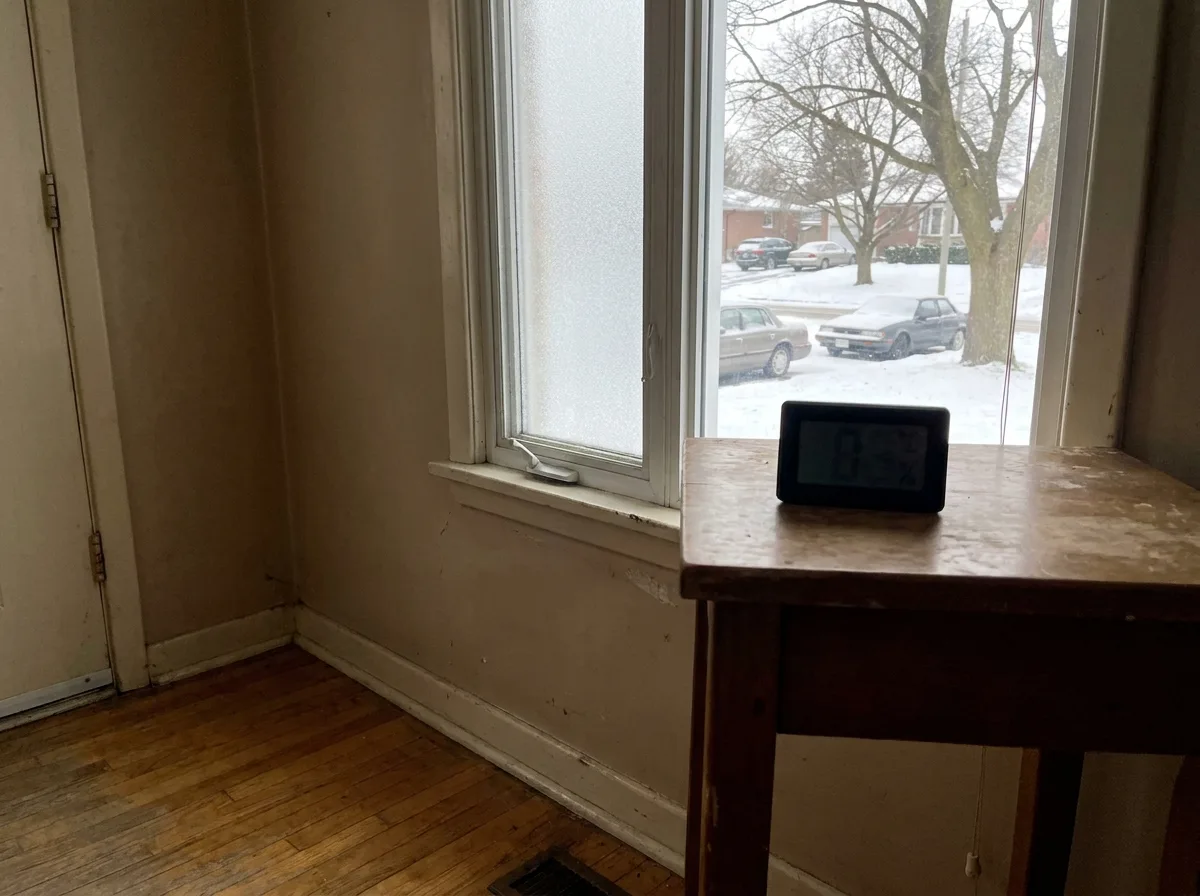
NRCan suggests letting your windows act as the indicator: if heavy condensation appears on the inside of double-glazed windows (other than in the kitchen and bathroom), there is too much moisture in the air. A hygrometer gives you the actual number. Light fog on the coldest mornings is not a concern; condensation or frost that keeps coming back is the signal to act.
Note the clash with health guidance. Health Canada recommends keeping relative humidity between 30% and 50%. With ordinary double glazing, the NRCan limit drops to 25% at −30 °C and 18% at −40 °C, below Health Canada’s 30% floor. In a deep cold snap, a home with older double-glazed windows cannot be both inside the healthy range and completely free of condensation. In that case, aim for the low end of the range, accept a little fog for a few days, and dry the sills.
Where the condensation is tells you what to fix
| Where you see it | What it usually means | What to do |
|---|---|---|
| Across the inside of the glass | Indoor humidity is above the limit for that outdoor temperature and window type. | Lower humidity, run fans, check the HRV and humidifier (see the steps below). |
| Along the bottom edge of the glass | The edge is the coldest part; NRCan says traditional aluminum spacers contribute to condensation along the edges. | Open blinds, clear the sill, keep the vent below unblocked. When replacing, choose warm-edge spacers. |
| On frames, sashes or near the weather seals | Cold frame material or moist air reaching cold parts of the window. | Lower humidity first; inspect weatherstripping and seals. |
| Between the panes of a sealed (factory) unit | The seal is broken. | Replace the insulating glass unit; check the warranty. Lowering humidity will not fix it. |
| Between the main window and a storm window | Moist house air is leaking past the inner pane. | Weatherstrip the inner sash and make sure the storm window’s weep holes are open. |
| On the outside of the glass around sunrise | Low-E glass keeps the outer pane cold; cool, calm, humid nights can fog it. | Nothing: it shows the window is losing little heat. |
| Only in the kitchen or bathroom | Local moisture from cooking or showers. | Range hood on high while cooking; bathroom fan 30 minutes after a shower. |
The between-panes rows come from NRCan’s Keeping the Heat In, section 8 (modified January 14, 2025), which adds that the storm-window type of problem is common on second storeys, where the stack effect pushes more house air outward, and can happen even in dry houses.

Worked example: one Ontario house at 45% humidity
Here is how the NRCan table plays out in a typical case. The house is kept at 21 °C (the temperature the table assumes), and the hygrometer in the hallway reads 45%, which is inside Health Canada’s 30% to 50% range. The question is which windows will fog as a cold front moves through. Each cell compares 45% with the NRCan limit for that window and temperature.
| Outdoor temperature | Double-glazed | Double-glazed low-E | Triple-glazed low-E |
|---|---|---|---|
| 0 °C | Clear (13 points of margin) | Clear (25 points of margin) | Clear (36 points of margin) |
| −10 °C | Fogs: 1 points over the 44% limit | Clear (14 points of margin) | Clear (29 points of margin) |
| −20 °C | Fogs: 11 points over the 34% limit | Clear (5 points of margin) | Clear (22 points of margin) |
| −30 °C | Fogs: 20 points over the 25% limit | Fogs: 3 points over the 42% limit | Clear (15 points of margin) |
| −40 °C | Fogs: 27 points over the 18% limit | Fogs: 10 points over the 35% limit | Clear (9 points of margin) |
What the numbers say:
- Ordinary double glazing is clear at 0 °C, starts to fog lightly at −10 °C (1 point over), and is 11 points over at −20 °C. To keep these windows clear at −20 °C, the household would have to bring humidity down from 45% to 34%.
- Double-glazed low-E stays clear down to −20 °C with 5 points of margin, then fogs at −30 °C (3 points over) and −40 °C (10 points over).
- Triple-glazed low-E stays clear at every temperature in the table, with 9 points of margin even at −40 °C.
- In a house with mixed windows, the weakest window sets the limit. At −20 °C, the gap between the limit for an old double-glazed basement window (34%) and a new triple-glazed one (67%) is 33 points, so a single old window can fog while the rest of the house looks fine.
This example is built only from NRCan Table 9-1; it is not a measurement in a real house. Actual results also depend on curtains, airflow at the sill and the condition of the frames.
How to stop condensation on windows in winter
Work through these steps in order. The first four cost little or nothing and solve most cases.
- Measure. NRCan recommends checking relative humidity throughout the house with a hygrometer. Compare the reading with the table above for tonight’s forecast low and your window type.
- Turn down the humidifier. If your furnace has a humidifier, NRCan advises setting it lower; its moisture guide goes further and says to disconnect humidifiers when you have a high-humidity or condensation problem.
- Cut the moisture sources. From NRCan’s list: don’t store firewood or dry laundry indoors, vent the clothes dryer outside, fix basement leaks, cover any exposed earth floor in a crawlspace with a moisture barrier, keep eavestroughs working and the ground sloping away from the foundation, use lids on pots and keep showers short.
- Run the exhaust fans. Health Canada says to keep the bathroom fan running at least 30 minutes after a shower or bath and to use the range hood when cooking, preferably on the highest setting. Fans must vent directly outside.
- Turn on the HRV. NRCan’s condensation page says to make sure your heat recovery ventilator is on if you have one. If condensation persists after you have cut moisture, NRCan says the next step is to increase the rate of ventilation.
- Let warm air reach the glass. Open blinds and curtains (Health Canada recommends keeping window coverings open), pull furniture away from windows and keep the heating register or baseboard under the window clear.
- Add a dehumidifier where needed. Health Canada suggests one in damp areas such as basements, and whenever moisture is condensing on cold surfaces like window panes or humidity is above 50%. NRCan points to ENERGY STAR certified models.
- Keep the heat at 17 °C or more. NRCan says it is generally best not to set the thermostat lower than 17 °C because moisture can build up in exterior walls; if you go lower while away for a week or more, humidity must be kept low.
RénoClair tip
During the first real cold snap, check every window first thing in the morning. Write down the outdoor temperature and the hygrometer reading the first morning the glass fogs: that pair of numbers is your own house’s limit, and it tells you how far to turn the humidifier down for colder nights.
Storm windows, shrink film and curtains
Extra layers can reduce condensation on the main window, but only if the inner layer is the tightest one. NRCan’s section 8 sets out the rules:
- Exterior storm windows: the main (inner) window must be sealed more tightly than the storm window, otherwise moist house air gets between them, condenses and can damage the sash and frame.
- Interior storm windows: seal them tightly so no warm air gets between the storm unit and the original window.
- Heat-shrink film kits: inexpensive and temporary; in most cases the film can be used only once, the double-sided tape can lift paint, and the window can’t be opened without removing the film. Lightweight film can be damaged by young children or pets, plastics must be kept away from strong heat sources, and some people are sensitive to the odour when the film warms in the sun.
- Curtains and blinds: they are not airtight, so NRCan warns they may cause condensation in winter by trapping cold air against the glass. Open them during the day.
When window condensation turns into mould
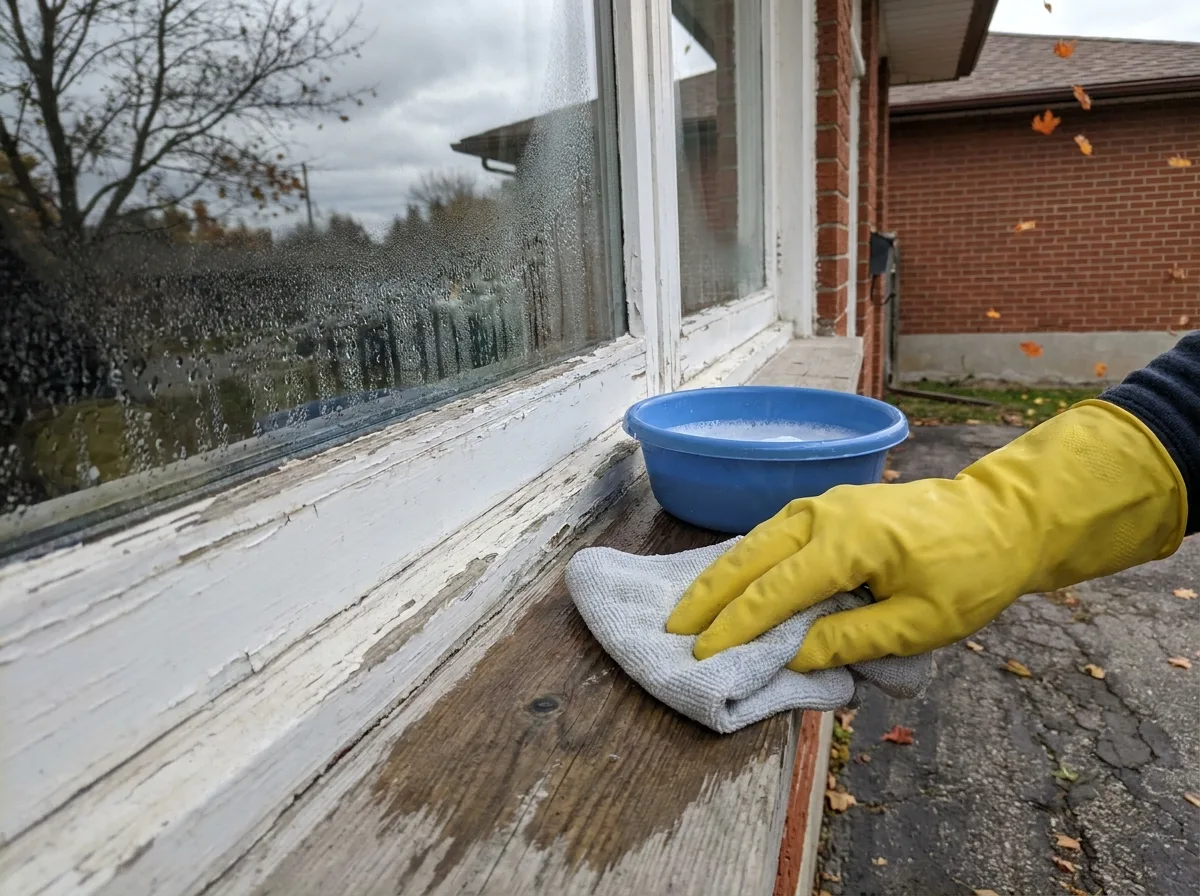
Water that sits on the sill every morning is the real risk. Health Canada’s guide to moisture and mould in the home (published January 2023) says mould can begin to grow within 48 hours in an area with excessive moisture, and recommends drying window frames and sills daily so water does not drip and cause mould.
- Size matters. Health Canada calls an area of mould small if it covers one square metre or less, medium if there are more than three patches each under one square metre but less than three square metres in total, and large if a single patch is larger than three square metres. Small areas can be cleaned by the homeowner following its procedures.
- Clean with soap, not bleach. Scrub with a cloth and an unscented soap solution, then dry the surface completely and quickly. Health Canada says not to use bleach to clean up mould.
- No need to test the air. In most situations Health Canada does not recommend air testing for mould; fix the moisture and clean what you can see.
If the sill or the drywall under the window stays damp, look beyond the glass: a basement that adds moisture to the whole house is a common culprit. Our guide to basement insulation in Canada covers moisture control on foundation walls.
Should you replace the windows?
Replacement is the right answer in two cases only: a failed sealed unit, or windows so cold that you cannot keep humidity in a healthy range without constant condensation.
- Failed seal (fog between the panes): NRCan says the problem is best corrected by replacing the glazing unit, not necessarily the whole window, and to check whether the window is still under warranty. Some specialty companies refurbish failed sealed units, but NRCan considers that a temporary fix that does not restore the original energy efficiency.
- Upgrading: NRCan says ENERGY STAR certified windows have less condensation than ordinary models, thanks to features such as triple glazing, low-E coatings, inert gas fill, thermally improved spacers, insulated frames and greater airtightness. In extreme climates, triple glazing also reduces fogging and freezing at the edges of the glass.
- Plan the ventilation at the same time. Because new windows tighten the house, humidity tends to rise after the job. Budget for working bathroom and kitchen fans or an HRV, or the new glass may fog anyway.
Ontario homeowners can check whether window and door work currently qualifies for a rebate in our Home Renovation Savings program guide; confirm the current amounts and deadlines on the official program site before you sign anything.
Common mistakes
- Leaving the furnace humidifier at the same setting from November to March, even though the safe limit for double glazing falls from 58% at 0 °C to 34% at −20 °C.
- Keeping heavy drapes closed day and night, which traps cold air against the glass.
- Switching off the HRV or bathroom fan in cold weather; NRCan says to keep the HRV on.
- Trying to fix fog between the panes of a sealed unit by lowering humidity: the seal is broken and only replacing the unit fixes it.
- Cleaning mould on the sill with bleach, which Health Canada advises against.
- Turning the thermostat below 17 °C to save energy without controlling humidity.
- Expecting new windows to cure a humidity problem on their own.
If your windows need replacing, estimate the cost with our window replacement cost calculator.
Frequently asked questions
Is condensation on windows in winter normal?
Some is. NRCan says occasional condensation is not a problem, especially on the coldest mornings or in the kitchen and bathroom. Condensation or frost that forms every day, runs onto the sill or appears on most windows means indoor humidity is too high for the outdoor temperature.
What indoor humidity should I keep in winter in Canada?
Health Canada recommends 30% to 50%. To avoid condensation, NRCan’s table gives lower limits as it gets colder: with ordinary double glazing, 44% at −10 °C, 34% at −20 °C and 25% at −30 °C (house at 21 °C).
Should I wipe condensation off my windows?
Yes. Health Canada recommends drying window frames and sills daily so water does not drip and cause mould, which can start within 48 hours in a damp area.
Will a dehumidifier stop window condensation?
It helps. Health Canada suggests running a dehumidifier when moisture condenses on cold surfaces such as window panes or when humidity is above 50%. Turning down the humidifier, running exhaust fans and the HRV should come first.
Why is there condensation between my window panes?
In a sealed double- or triple-glazed unit, it means the seal is broken. NRCan says to replace the insulating glass unit and to check the warranty. In a window with a storm sash, it means house air is leaking past the inner window, so weatherstrip the inner sash and open the weep holes.
Why do my new windows have condensation on the outside?
High-performance low-E glass loses so little heat that the outer pane stays cold. NRCan says condensation may form on the outside around sunrise after a cool, calm, humid night. It is not a defect.
Do closed blinds cause condensation on windows in winter?
They can. NRCan says closed drapes and blinds, deep sills and furniture block warm air from reaching the glass, and curtains are not airtight. Open them during the day and keep heating vents under windows clear.
Keeping humidity in check is one of several cold-season jobs. See our winter home maintenance checklist for Ontario for pipes, thermostat settings, vents and the other tasks to schedule between October and March.
The bottom line
Condensation on windows in winter is a humidity-versus-temperature problem. Check NRCan’s table for your window type and the forecast low, measure with a hygrometer, then lower humidity and improve air movement before you think about new windows. The exception is fog trapped between the panes of a sealed unit: that is a failed seal, and only a new glass unit fixes it. For a French-language version with a humidity calculator, see condensation in windows in winter (in French) and our humidity by outdoor temperature calculator (in French).
Sources
- Natural Resources Canada, Keeping the Heat In, section 9 (Table 9-1, sections 9.1.2 and 9.4), modified September 29, 2025; read November 2, 2026.
- Natural Resources Canada, Keeping the Heat In, section 8 (windows and doors), modified January 14, 2025; read November 2, 2026.
- Natural Resources Canada, Condensation, modified January 16, 2025; read November 2, 2026.
- Natural Resources Canada, Humidity levels, cooling and ventilating equipment, modified March 21, 2025; read November 2, 2026.
- Health Canada, Guide to addressing moisture and mould in your home, published January 2023; read November 2, 2026.
- National Research Council Canada, Canadian Building Digest CBD-4, Condensation on Inside Window Surfaces (A. G. Wilson, 1960), for the dew-point principle only.